Showing posts with label teaching history. Show all posts

Wednesday, October 2, 2013

The Battle of Chickamauga at 150 and Teaching with Civil War Reenactments

Lisa Clark Diller

I will admit to having been a re-enactment virgin until the weekend of September 21, 2013.  As readers of this blog are well aware, we are in the midst of all things Civil War in the United States. Chattanooga, Tennessee, is marking its own big battles all this fall. 
Specifically, the engagements at Chickamauga occurred 150 years ago, September 19-20.    As someone whose research reflects a great deal on another civil war (one in England in the 1640s), I have tended to smile blithely through local history enthusiasts’ explanations of the Confederacy, the Union, and the role played by East Tennessee in that conflict.

However, as a teacher of a first year seminar who is always looking for the required “bonding experience” for my students, this year it seemed appropriate to participate in some local history.  I don’t think this was one of the most effectively executed re-enactments (others with more experience have confirmed this opinion).  But the weather was lovely, the setting beautiful, and my students seemed to have a good time.

It made me start thinking about the role of such events as educational opportunities.  What is the purpose of re-enactments of battles for historical education? The re-enactments seem to me to be a bit different than the interpretations offered in museums and on walking tours. Those of you who study public history can perhaps straighten me out on this. I can guess why the people participating might be enjoying themselves. I can see why communities might want to watch them. But when it comes to serving the goals of education—what is going on here?  I am specifically thinking about the “so what?” of history.  I quizzed my students before and after the event regarding what they thought this experience revealed of the “so what?” of historical thinking and skill-building.  Here are some of their comments:

Monday, September 2, 2013

Syllabi Creation, History Courses, and More

The  blog will take a short break as the semester kicks in.  In the meantime, have a look at these posts on teaching, baseball history, syllabi creation, questions for the survey course, American pre-history, and classroom decorum.

For other posts on teaching, check out these essays, forums, and interviews in Historically Speaking.

Friday, August 23, 2013

History Classroom Roundup


Alastair Jamieson, "Germany's Angela Merkel teaches history class on Berlin Wall anniversary," NBC World News, August 13, 2013

German Chancellor Angela Merkel drew on her Communist-era experiences to teach a history class at a school on Tuesday - the 52nd anniversary of the construction of the Berlin Wall.

Merkel, who is campaigning ahead of next month’s general election, gave a 45-minute lesson as a "substitute teacher" for a 12th-grade class in east Berlin.>>>

Sacha Cordner, "Lawmaker Considering Legislation To Cut Down 'Islam-Bias' In Fla. School Textbooks," WFSU-Tallahassee, August 5, 2013

A Florida lawmaker is considering legislation that would give the public input on the content found in Florida school textbooks. His overall aim is to cut down on what he calls the “Islam-bias” in state schools.

Melbourne Republican Representative Ritch Workman says Prentice Hall’s “World History” book not only puts an inaccurate spin on Islam, it also dedicates a whole chapter to the religion.>>>

Monday, June 3, 2013

Humanizing History

Steven Cromack

When I teach, I deliberately make an effort to connect big history to the personal lives of my students. At the heart of my world history curriculum are three main ideas:

Walker Evans' photo, "In front of 310 East
Sixty-first Street," 1938. Courtesy
of the Library of Congress.
  1. How each individual sees the world matters.
  2. Reality is a construction based on an individual’s worldview.
  3. It is difficult to reconcile an individual’s interests with those of a society.
It is my hope that as we examine history with these ideas in mind, students can begin to think about their existence on a deeper level; that as they go about their daily lives, they have the skills they need to grapple and engage with their world; and that they will learn to face not only their own beliefs and sense of morality, but also those of others. In immersing oneself in the world, the individual turns information into meaningful enlightenment. For, as John Dewey once wrote, “Education is not preparation for life; education is life itself.” 


Monday, May 6, 2013

Apologia pro Common Core

Steven Cromack

The 1983 report A Nation at Risk: The Imperative for Education Reform stunned Americans. Schools across the country scrambled to design content standards and implement assessments.
Thirty-years later, history seems to be repeating itself. In an effort to improve K-12 education, forty-five states, the District of Columbia, and four territories have adopted and implemented the Common Core State Standards. As of 2013, Texas, Alaska, Virginia, Minnesota, and Nebraska are the five holdouts. Members of the academy and secondary school history teachers should be euphoric about the Common Core, which mandates that middle and high school students actually do the work of historians. This includes, but is not limited to, reading and analyzing primary and secondary sources, as well as synthesizing such information coherently in written assignments. The crux of the Common Core is 21st-century readiness, i.e., putting a verb in a sentence correctly, and being able to read not “good,” but well. 

The standards themselves are not revolutionary. In fact, they simply mandate that teachers actually teach reading and writing. The best teachers have always done this. But at least with the Standards, teachers will be held accountable if they choose to use PowerPoint and the textbook as their sole methods of instruction. 

Friday, April 19, 2013

In Praise of YouTube: Interviews on Civil Rights, Early Modern England, Writing, and Teaching History

Randall Stephens

On a recent browse through the loud, garish halls of YouTube I found several interesting history clips.  Without diminishing the importance of LOL catz videos and the endless Fail compilations, I'd like to praise/point to some of the history gems on YouTube.  In the last 5 years YouTube has served as a go-to source for me.  Interviews, documentary films, and materials on teaching draw me in.  It's been a boon to my teaching and research.

For example . . .

Hear the late esteemed historian and former master of Balliol College, Oxford, Christopher Hill speak about his work on 17th-century England.  He also reminisces on why he became a historian, the nature of revolutions, and more. ("Conversations With Historians: Christopher Hill," BBC Radio 4, October 14, 1991)


In this much more recent video (April 11) see historian Taylor Branch discuss the critical year of 1963 and the context of the black freedom struggle.  Branch pieces together this momentous year with the wisdom of 50 years of hindsight.  He also wonders why historians have not explored some of the major issues of the era. (Religion & Ethics Newsweekly, PBS.)


And finally, Sam Wineburg and others in this clip, speak about "Teaching Students to Think Like Historians," Stanford University, March 4, 2012.  (Several months back I interviewed Wineburg here on a related topic.)  "The first thing that we need to do is to break the stranglehold of the textbook," says Wineburg.  To play on the murder theme a little more, see Jonathan Rees's August 16, 2012 piece on this blog, "Kill Your Textbook."  Do history textbook snuff the life out of history?  Are students in history classes unfamiliar with, as Wineburg puts it, the "variety of voices" from the past?  How can high school and university history instructors better teach about the past?


Wednesday, April 10, 2013

Why History Students Should Love Big Data

Eric Schultz

Spring 1976. Wilson Hall, Brown University. The late, great Professor William McLoughlin has just informed his 85 students in “American Social and Intellectual History” that they are to write their first paper. All he has given us is the title: “The Age of Jefferson and Adams.” We groan. Then he adds: “Keep it to three pages or less. Double-spaced.” We smile. Three pages? How hard can that be?

“If you make the margins too wide,” McLoughlin adds, “I’ll mark you down a grade.”

Needless to say, nobody got an A on that paper, or so the good professor informed us. There may have been a B or two. Not me. It was all I could do to contain my flowery opening paragraph to a single page. Some of us recovered slightly in round two, wherein we committed “The Age of Lincoln and Calhoun” to three, double-spaced pages. Some retreated to organic chemistry and other more reasonable challenges.

Little did I know, but I had just been introduced to Big Data—though it would take 35 years to earn that name. Take an endless, insurmountable, seemingly disconnected pile of information, separate the grain from the chaff (or, as my engineering buddies would say, the signal from the noise), and tell a concise, compelling story about what it all means.

Wednesday, April 3, 2013

Visual Learners and Historical Myopia

Elizabeth Lewis Pardoe

On my first day as a brand new assistant professor a student came up to me, introduced himself, and announced, “I am a visual learner.” The class was a reading and writing intensive freshman seminar with a predetermined syllabus. I knew we had a problem, but I had limited agency to remedy the situation. 

This year I decided to see if I could match my long-since graduated student’s need for visual stimulus with my own desire to make students delve deep into the documents that reveal the mental landscape of the past. I integrated video presentations into the middle portion of each three-hour seminar.

The visual interlude fixed one pedagogical problem and revealed another. Although academic historians of colonial America know that all the world was not New England, word has yet to reach the filmmakers. Three Sovereigns for Sarah captures Salem’s witchcraft crisis and Mary Silliman’s War strips the romantic Revolutionary myths away from a tense civil war in Connecticut. When I wished to illuminate my own area of expertise, the colonial mid-Atlantic, I came up short. No film of which I am aware follows Conrad Weiser through Penn’s Woods or brings to life the ascetic world of the Ephrata Cloister. In the realm of video pedagogy,  the years between witches and independence and the geography between Puritans and plantations cease to exist. 

Monday, March 11, 2013

Field Trip: A Report from the Bright Side of Fourth-Grade History Education

Chris Beneke

Guided tour at Lowell National Park. 
Photo courtesy of www.nps.gov/lowe
If the experiences of my kids are at all representative, the glum accounts you’ve heard or read about elementary and secondary education in the U.S. have some basis in fact. Public school students move in virtual lock-step with their classmates, get a meager fifteen minutes for recess, and take tests with unsettling regularity. Meanwhile, their hardworking teachers and principals must manage both rigid curriculum standards and large classes.

In light of these oft-repeated concerns, my perspective brightened last week while chaperoning my son’s fourth-grade class trip to the Lowell National Park, the splendid and well-preserved site of the famous textile mills where America’s industrial revolution took off in the 1830s and 1840s. I didn’t come away feeling like a Finnish parent probably feels after accompanying his or her child on a field trip. Still, the experience left me much more optimistic about the trajectory of early history education: the kids arrived well-prepared and the museum’s activities were engaging, hands-on, well-paced, and occasionally revelatory.

Tuesday, February 12, 2013

Are You A “Rigorous” Teacher?

Steven Cromack

“Rigorous” is one of the most commonly used words in education these days. In their profiles, many schools—public, private, parochial, charter, institutions of higher learning—claim to be “rigorous.” Teachers and professors claim to be or have a reputation for being “rigorous.” But what on Earth does that word actually mean? What does it mean to be a “rigorous” teacher?
 
In Change Leadership: A Practical Guide to Transforming Our Schools (Jossey-Bass, 2006) Tony Wagner et al. explore whether rigor is about content or teaching, or both. They conclude that there are common elements between content and instruction, but ultimately, the definitions of rigor are ambiguous. While each educator must make sense of rigor for himself or herself, Change Leadership suggests ways to help teachers understand rigor better. Rigor is not “simply about students being given more or harder work. Rigor is about what students are able to do as a result of the lesson.” The state of Virginia requires students to memorize ninety-two natural elements. But, what good is such information if the students do not understand the scientific method behind Mendeleev’s Periodic Table? In contrast, Boy Scouts and Girl Scouts do not earn merit badges through memorization and test taking. Instead, they need to develop a plan and execute it, and the end result is a hands-on service project, the sum of everything they have learned.

Wednesday, January 9, 2013

Why I Teach Baseball History: A Brief, Self-Serving Manifesto

Chris Beneke

A detail of a print of Union prisoners in a
Confederate camp playing baseball, Salisbury,
N.C., 1863. Courtesy of the Library of Congress.
Very few people ask me why I teach baseball history. It’s obvious. I love baseball. Lots of students love baseball.

But let me offer another explanation, something out of left field: baseball history is also a really effective way of teaching American history.

Before you sport non-enthusiasts get too worked up, let me dispense with the usual caveats. College-level baseball history students shouldn’t memorize how many American League pennants the Yankees won during the 1950s (8) or the last time the Chicago Cubs were major league champions (1908). It’s unnecessary for them to recall that Ted Williams batted .406 in 1941 or that George Foster led the major leagues with 52 home runs in 1977. They could also receive a fine education in baseball history without knowing that Don Larson pitched the only perfect post-season game in 1956 or that Bob Gibson struck out 17 batters in the opening game of the 1968 World Series.

Tuesday, January 1, 2013

Teaching Emancipation

Aaron Astor

With the sesquicentennial of the Emancipation Proclamation and the ongoing popularity of the Lincoln movie, which focuses on passage of the Thirteenth Amendment in the House of Representatives, it seems as relevant as ever to talk about how we teach emancipation to undergraduates today.  When I broach the subject in my 19th Century US History course I begin by asking the class a simple question:

Who freed the slaves?

The answers are predictable. First is usually “Lincoln.” And then “the Union Army,” followed by “Congress” and/or “the 13th Amendment.”  A particularly astute student will say, “the slaves freed themselves.” 

The answer, I quickly tell them, is that all of these things are true. But as quickly becomes apparent, I tend to emphasize the latter interpretation—self-emancipation—over the others.   After all, scholarship on emancipation in the last 30 years has focused more and more on the myriad ways in which slaves undermined the bonds of mastery, broke for Union lines at places like Fortress Monroe, attained contraband status in Union army camps, served in the Federal army as soldiers, and made a revolutionary bid for freedom and citizenship in a unique moment when the white power structure was rent by civil war.   I have contributed to that scholarly trend myself with my work on the border states of Kentucky and Missouri, where the Emancipation Proclamation did not apply, and slave agency—by male and female alike—proved especially critical in the emancipation process.

Friday, November 16, 2012

Roundup: The History Classroom

.
Janet Bagnall, "Teaching Sovereignty in Quebec Classrooms," The Gazette, November 6, 2012

. . . . Éric Lamoureux, 45, a history teacher at Vanier College, instructs students who have already had several years of Quebec history classes in high school. Students’ reaction to another course on Quebec history, complete with discussion of the two independence referendums, is “Oh, no, not that again,” he said. “Yet I teach a course on Montreal history and it’s full to the rafters.”
>>>

Nicholas Ferroni, "Using Music in the Classroom to Educate, Engage and Promote Understanding," Huffington Post, November 8, 2012

. . . . Educators have been using music to effectively educate for as long as there has been music. Many of us were fortunate to have those unconventional and edgy teachers (mine were Mr. Caliguire and Mr. "Weez," and I can't thank them enough), who played the iconic protest songs from the anti-war movement of the '60s and '70s, and then we analyzed and discussed the lyrics. This was one of my favorite activities and it helped me understand the nation and its differing political views better than any textbook or lecture ever could. This, however, is not the method of using music in the classroom to which I am referring. The method of using music that I will be discussing can be applied to all subject areas and used to engage all learners.>>>

Lara Harmon, "Teaching with Food," Teachinghistory.org blog, October 15, 2012

We need food to live, but don't always think about where food that comes from. We carry foods and foodways with us as we immigrate, emigrate, or migrate. We share food and celebrate with it. Every bite we eat has a long history involving geography, trade, science, technology, global contact, and more.>>>

James M. Lang, "Teaching What You Don't Know," Chronicle of Higher Ed, October 22, 2012

. . . . I can confirm that easily enough from my own dozen years of teaching at a liberal-arts college. Although my background is in 20th-century British literature, I regularly have to dip back into the 19th century for my survey course on British literature. With almost no formal training in rhetoric, I count "Argument and Persuasion" among my standard course offerings. Every member of my department could make similar claims.>>>

Monday, October 29, 2012

Teaching History to Undergrads: An Interview with Sam Wineburg

Randall Stephens

Sam Wineburg is a professor in the School of Education at Stanford University and director of the Stanford History Education Group.  He has written and taught widely on historical consciousness, questions of identity and history in recent America, and the uses of the past.  He's the author of Historical Thinking and Other Unnatural Acts: Charting the Future of Teaching the Past (Temple University Press, 2001); Reading Like a Historian: Teaching Literacy in Middle and High School Classrooms (TC Press, 2011), with Daisy Martin and Chauncey Monte-Sano; and editor of Knowing, Teaching, and Learning History: National and International Perspectives (NYU Press, 2000) with Peter N. Stearns and Peter Seixas. (In 2006 Joe Lucas interviewed Wineburg in Historically Speaking.)  

Below I ask Wineburg about one of his courses and the challenges of history education.

Randall Stephens: What made you decide to teach a course on "Howard Zinn’s A People’s History of the United States & the Quest for Historical Truth"?

Sam Wineburg: When I moved to Stanford from the University of Washington in 2002, I began to encounter very bright students in our Masters of Teaching program who were highly critical of their high school history books, but who reserved a sacred place for Zinn's A People's History. It had been years since I read the book, so I went to the bookstore, purchased the latest edition and started to read. The first thing that popped out at me was that despite the fact that the book had been in print for over two decades no new scholarship had been incorporated in Zinn's narrative. Chapters on the Revolution, the Civil War, World War II, the Cold War and everything prior to 1980 were frozen in amber. It was as if, once you came to your historical conclusions, you never had to rethink your position in light of new scholarship—such as the opening up of the Soviet archives and the light these documents shed on spies in America, or the tell-all exposes of the Emperor Hirohito's inner coterie and how these memoirs changed our ideas about how close (actually, how distant) the Japanese were to surrender before Hiroshima. The more I started to dig the more I started to realize how useful A People's History would be pedagogically, particularly for students who conceptualize the past in stark binaries of true and false. 

Stephens: Why have historians had such varying views of Zinn's bestselling work?

Wineburg: I think most historians agree that the book is pretty weak as a piece of historical scholarship. The most favorable review of the book was by Eric Foner, who when he published his review in 1980, was fairly close to Zinn politically. But even Foner's review spelled out serious reservations. Since then, Michael Kazin, the editor of Dissent and a historian with impeccable leftist credentials, gave A People's History a good thrashing in a review published in 2004. It seems to me that the most ardent fans of the book come not from the community of professional historians, but from the ranks of high school teachers, Hollywood personalities, and Amazon.com reviewers.

Wednesday, October 3, 2012

Advice for the Job Season: How to Think About Applying for a Job, Part 1

Heather Cox Richardson

The academic job market is in full swing. That’s the good news.

And as usual, there are way too few jobs. That’s the bad.

At this point, I’ve spent significant time on both sides of the hiring equation, and have a few suggestions for navigating the job search.

First of all, you almost certainly will not get your dream job. But please, please hear this: THIS IS NOT BECAUSE YOU ARE NOT A GOOD CANDIDATE!!! It is because there are too few jobs. The C.V.s that come in for a search these days are frighteningly impressive. Yours is one of them. When committees have to choose whom to interview, I promise you they do not look at your materials and say: “Gee, why did this loser apply?!” They say: “And yet another terrific scholar. Fortunately for us, his work doesn’t quite fit what we’re looking for.” And they put your application aside.

While this is incredibly depressing when you’re going through it—and many schools contribute to the darkness by ignoring you, announcing the interview schedule before informing you you’re not on it, and so on—there is one important light to remember. YOU DO NOT WANT A JOB THAT IS NOT A GOOD FIT FOR YOU. I know, I know, you want any job right now. But actually, you really don’t. Unlike many professions, it’s very hard for academics to change institutions. Try moving your family across the country for a job only to tell your partner six months later you hate your department and are going back on the job market to apply for a job on the other side of the country. Not a good idea. If a search committee doesn’t jump at the chance to interview you, you don’t want to interview them, either. The fit would have been a bad one.

Often, by the way, you won’t be able to tell whether or not your work is a good fit with a department. A scholar of the Taiping would seem, for example, to be a good candidate for an advertised job in nineteenth-century Asia. But that same (hypothetical) ad will not have mentioned that the department has a European scholar who is fiercely protective of his favorite course on world revolutions that highlights the Taiping. So even if you look at the description and think the fit should have been perfect, remember that there could have been a wide range of internal reasons you were not.

So if you’re almost certainly not going to get the job you want, or maybe any job, what’s the point in applying? You should consider jobs outside of the academy (more on that later), but you will have a better relationship with the academic job market if you reorient how you think about it.

If you can, try not to see applying for a position just as a job application. It is advertising. You are letting people who are in a position to appreciate the importance of your work know who you are and what you do. Until now, you have interacted primarily with just a handful of scholars, and most of them are at your own university. It’s the right time for you to take your scholarship to the world, and there is no better way to get an audience for it than to hand your materials to specialists around the country who are on search committees. They may not be able even to interview you because you do not fit the job at hand, but they may still be impressed with your materials. They might well remember you when someone asks for a recommendation for a conference panelist, or tell their editors that you have written an interesting manuscript and should be on their radar screens.

The only way to navigate such a bleak job market is to recognize that historians are a large community of scholars—to which you already belong—and that we are eager to hear what you’re bringing to the table.

Wednesday, August 1, 2012

THS Blog on NPR


The other morning I was just biding my time, reading a biography of Margaret Sanger and enjoying summer vacation when I got an e-mail from an NPR producer.  They read my last post for the HS blog and wanted me to come on Talk of the Nation to discuss it.  I did.

It's the last segment of Monday's show.  The callers got me started on another hobby horse of mine: teaching without a textbook. 

Here's a little from that Talk of the Nation piece:

In college, study of American history is often broken down into two chunks. Professors pick a date to divide time in two: 1865, after the Civil War, say, or 1900, because it looks good. So for those who teach courses on the first half, their purview is fairly well defined.

But those who teach the second half, such as Jonathan Rees, face a persistent problem: The past keeps growing. Rees teaches U.S. history and, like many teachers, every few years responds to major events by adding them to his lectures. But that means other important events get left behind. He wrote about this conundrum in a piece for The Historical Society blog, "When Is It Time To Stop Teaching Something?"

Wednesday, July 11, 2012

Our Pro or Anti-Slavery Constitution?

Steven Cromack

On January 27, 1843, during the Eleventh Annual Meeting of the American Anti-Slavery Society, the abolitionist William Lloyd Garrison submitted a resolution to the Society for approval:  “Resolved, that the compact which exists between the North and the South is a covenant with death and an agreement with hell—involving both parties in atrocious criminality—and should be immediately annulled.”  As time wore on, his rhetoric and actions intensified.  On July 4, 1844, he publicly burned a copy of the Constitution.[1] Garrison believed that the Constitution was inherently evil because it supported slavery. That founding document was an affront to God.   

Is the Constitution pro-slavery?   

For the past four weeks, I have had the pleasure of attending the James Madison Foundation’s Summer Institute on the Constitution at Georgetown University.  The Madison Foundation awards fellowships to social studies teachers and aspiring teachers each year, usually one per state.  As such, I am surrounded by some of the best and brightest secondary social studies teachers from across the nation. These fellow teachers care deeply about their field and their career, and are just as passionate about the material they teach.  On Monday, in a morning discussion section, the topic of conversation was whether the Constitution was pro-slavery, a compromise, or something else. 

For a good portion of the time, the fellows discussed elements of compromise found in the Constitution.  Then Will Lorigan, from Indiana, argued that the Constitution was in fact an anti-slavery document because while it conceded certain concessions to the Southern states, it also gave the national government the power and means to abolish the institution after 1808.  Another, Christopher Carl from Florida, added that the Northerners knew that by offering the Southern states serious concessions—proportional representation, the fugitive slave clause, and a ban on further legislation on the slave trade until 1808—they knew they would triumph in the long run.  Such assertions prompted significant and fascinating discussion.

It is a very intriguing argument.  Indeed, it seems that the Academy has been grappling with the issue of slavery and its role in the founding since the era of the Civil Rights movement. And the debate rages on.  In her 2006 book American Taxation, American Slavery, Robin Einhorn writes:

We can all agree that some of these masters had admirable qualities, that Thomas Jefferson was charming and eloquent, that James Madison was a talented political theorist, that George Washington was a brilliant general . . . .  Nevertheless, these men all owned human beings and, as politicians, defended the ownership of human beings— even when they believed that society would be better off if it acknowledged that “all men are created equal” . . . and so on.[2]

Throughout her book, Einhorn argues that slavery determined the economic system of the early United States, all the while undermining the spirit of a new American nation.

The historian Gordon Wood, however, lambasts those historians who considered the continuation of slavery as a failure of the revolution.  In a scathing review of Einhorn’s book, Wood writes:

It was inevitable that our recent accounts of the Revolution and the founding of the nation would reflect our increased understanding of the importance of slavery to the history of America. . . . to help satisfy the seemingly insatiable desire of many historians today to place slavery at the heart of America’s origins. . . . Robin L. Einhorn has no problem reading the present back into the past or, for that matter, reading the past forward into the present.[3]

Wood’s words essentially indict Einhorn for bringing the present perspective of hindsight into the past.

Was the Constitution pro-slavery or anti-slavery?  Was it a compromise or something else?  Such debates reveal the contested nature of history.  These men— Washington, Jefferson, and Madison—have long been dead.  Their writings live on.  Historians will never be able to fully know the inner worlds of these figures.  Scholars can never know their true intentions, or comprehend fully what they really meant.  The founders’ words offer clues, and perhaps if one gets enough pieces of the puzzle, an incomplete portrait emerges.  But if historians cannot agree on the shape of the piece, not even a partial picture emerges.

Another fellow, James Moran from Idaho, put it another way when he said, “the Constitution is what it is, nothing more.”
__________________

[1] “William Lloyd Garrison,” in American Political Thought, 6th Edition, ed. Dolbeare & Cummings (Washington: CQ Press, 2009), 203.

[2] Robin Einhorn, American Taxation, American Slavery (Chicago: University of Illinois Press, 2006), 14.

[3]  Gordon Wood, “Reading the Minds of the Founders,” New York Review of Books, 28 June 2007.

Monday, May 21, 2012

When Is It Time to Stop Teaching Something?

Jonathan Rees

Those of us who teach the second half of the American survey course face a problem that only recent historians ever seem to face: our period keeps expanding.  Until there’s some kind of mass meeting where all we historians decide to move the dividing line in a two-course US survey sequence from 1865 or 1877 to 1900 or something, what counts as 1877 to the Present will only get larger.  This poses some problems for those of us who’d like to keep our courses current.

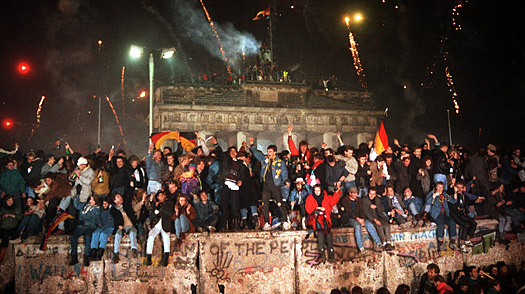
When I started teaching during the late-1990s, 1989 (with the fall of the Berlin Wall and all that) was a natural time to stop.  A few years ago, I rearranged my entire survey course in order to make it up to September 11, 2001, without actually covering it as everyone I was teaching still remembered it perfectly.  Well, those days have changed.  Listening to my students talk, I realized it was time to recall the events of that day and at least a few of the ones following it because they were barely cognizant of what was happening at that time yet have been living in its shadow ever since.

Besides needing to make room for the near present, I’ve been trying to update some of my other lectures from further back in light of recent scholarship.  When I first started talking about the 1970s, it was all Watergate all the time.  After all, It Seemed Like Nothing Happened was the first book on that decade to come out after it ended.  Jefferson Cowie has absolutely torpedoed that stereotype forever.  I’ve also tried to include some of the absolutely amazing material that’s been written about the rise of conservatism in recent years by people like Kim Phillips-Fein and Bethany Moreton.

My problem, therefore, has not been what to include in the new lectures I’ve been writing.  My problem has been what to cut out.  Cover new ground in any depth and something has to go.  Since I’ve also tried to redesign my course to include less lecturing, some of these cuts have been quite painful.

For example, I used to work for Stanley Kutler.  If you know Stan, you know that he was the first academic historian to write a book about Watergate.  When you get Stan to talk about Nixon, he won’t stop.  Therefore, I picked up an enormous amount of information about Watergate almost by osmosis.  I’ve cut my Watergate coverage down from a lecture all its own to about ten minutes.  It just doesn’t seem as important as it once did, anyway. 

Another subject from the survey class I used to cover in much greater detail is the New Deal.  That was two lectures:  First New Deal in the first one, Second New Deal in the second.  The Depression got a lecture all its own.  It still does, but I’ve got the New Deal down to one lecture by simply admitting to myself that the long string of Alphabet Soup programs that history teachers have been teaching since about the time that Roosevelt died is actually rather boring.  I now cover the programs that I think were crucial (NIRA, Social Security, NLRA, and a couple of others) and let my students read about most of the rest.

Similarly, I used to have one lecture for the Populists and another lecture for the Progressives.  Maybe that’s because I was taught by so many political historians as an undergraduate and graduate student, but I’d rather be talking about scholarship that dates from after I was born, thank you very much.  If I enjoy it, I think they’ll enjoy it more.  Just because you learned it is no reason that you have to cover the exact same material that your professors did. 

Ultimately, I think the question of coverage is the key here.  As Lendol Calder has been saying for years, our survey courses do not have to turn us all into walking encyclopedias.  (In fact, if we do our jobs right many of your students will come back for more in upper-level courses.)  Since covering everything will get even harder as time marches on, perhaps its best to change your approach before defeat becomes inevitable.

Jonathan Rees is Professor of History at Colorado State University – Pueblo.  He blogs mostly about technological and academic labor matters at More or Less Bunk, but still writes about history there every once in a while.

Monday, March 26, 2012

Norway Doorway, pt 5: Sean Taylor on Reacting to the Past

Randall Stephens

One of the more enjoyable things about my Fulbright experience in Norway has been getting to know other American Fulbrighters and to hear about the work they are doing. Martin Fisk (Oregon State University, University of Bergen) is studying bacterial life "deep in the Earth and their impact on the rocks in which they are found. This research could contribute to solutions
of a number of environmental problems and help to identify evidence of past life on Mars." He's one of the researchers who is taking part in a future Mars Rover mission. Others are studying climate science, literature, drama, public art, the nature of genocide, and much, much more.

The historian Sean Taylor--a Fulbright scholar at the University of Agder in Kristiansand--is associate professor of history at Minnesota State University Moorhead. His research focuses on colonial, revolutionary, and early national America. While in Norway he is working on a dynamic new pedagogy that is changing the way we draw students into debates about history. Called Reacting to the Past, this history game offers students the chance to engage history on a more direct level.

The Reacting to Past website at Barnard College describes it as follows:

Reacting to the Past (RTTP) consists of elaborate games, set in the past, in which students are assigned roles informed by classic texts in the history of ideas. Class sessions are run entirely by students; instructors advise and guide students and grade their oral and written work. It seeks to draw students into the past, promote engagement with big ideas, and improve intellectual and academic skills.

In the video embedded here I speak to Taylor about his use of this pedagogy and how it has worked in his classroom. He also speaks to me about Barnard College's role in developing curriculum and hosting events. And finally Taylor tells me a little about how he'd like to use Reacting in the classroom in Norway.

Wednesday, March 14, 2012

The Confucians Who Saved Middle Earth

Steven Cromack

It is particularly hard to get students interested in United States history. But this can seem almost impossible when studying ancient civilizations. How could a teacher get her students interested in Confucianism? If 19th-century U.S. history seems distant, what about the Warring States period in 481 B.C.?

One of the ways might be to take the ideas Confucius posited and find them in today’s culture. According to Confucius, an individual must be great, humble, and exhibit tremendous self-discipline. In The Lord of the Rings, Frodo and Sam are Confucian heroes. A teacher can use Tolkien’s Middle Earth to examine Confucianism and the Warring States Period of China.

In Tolkien’s Lord of the Rings, Middle Earth stands upon the brink of destruction. All that the dark lord Sauron needs to destroy the world is his “ring of power.” Frodo Baggins, a hobbit, possessed the one ring and brought it to the Council of Elrond. There he sat quietly as the leaders of the free races debated what to do with the ring. Eventually, the group decided that someone must cast the ring back into Mount Doom, where it was forged. No one, however, could agree on who could or should take the ring. At long last Frodo volunteered to carry the burden, bear its suffering, and resist the temptation to use its power. Tolkien writes, “At last with an effort he spoke, and wondered to hear his own words, as if some other will was using his small voice. ‘I will take the Ring,’ he said, ‘though I do not know the way.’”[1] In the wake of this declaration, the free peoples of Middle Earth rallied behind the hobbit, and so began the journey of the fellowship of the ring. Throughout the journey, Frodo was tempted to use the ring and to surrender to its temptation. But, he resisted, often with the help of friend Sam.

With the collapse of the Zhou Dynasty, China entered a civil war that would last for several centuries. At the center of the Warring States conflict was a debate over the role and purpose of the emperor. In his Analects, Confucius posited that the king needed to exhibit te, or the great magnetic, moral force produced by holding fast to the “way of the ancestors,” (the tao.) In order to do this, the king had to follow the li, or the traditional, ritually prescribed actions including etiquette. In The Analects, the Master [Confucius] said, “He who rules by moral force (te) is like the pole-star, which remains in its place while all the lesser stars do homage to it” (Analects, Book 2, Ch. 1). Confucius continued that the king must, “govern them by moral force (te), keep order among them by ritual (li), and they will keep their self respect and come to you by their own accord” (2.3).

Confucius’s words about how the king should act were merely an idealistic vision of what a good emperor should look like. He saw the reality of the Chinese monarchy: every dynasty rose in the glory of victory and fell violently from power. For Confucius, there was no good king, no savior, no real exhibitor of te at the top. Confucius believed that no living man could separate himself from the corrupting power that comes with ruling. If the king at the top could not provide order to tame the chaos, or provide stability for the bottom, what hope was there for the world, or those living in it?

Confucius believed that humans could impose their will on the world. As there was no savior coming to rescue the world, every person must act as the good king. Each individual must be the savior of everyone else and have the wholeness of a king. Everyone must exhibit te. On the part of the person, this takes tremendous self-discipline (8.4). According to the Analects, self-discipline meant that individuals must overcome selfish desires, remove all traces of arrogance, and “be loyal and true to your every word, serious and careful in all you do.” As for the person who has “taken goodness for his load,” as Frodo did, Confucius wrote (8.3):

In fear and trembling,
With caution and care,
As though on the brink of chasm
As though treading on thin ice.

Frodo and Sam took “goodness” for their loads and acted because Middle Earth was “on the brink of chasm.” For Confucius, the tao was “the way” to take control of the chaos, to free oneself from the pain of living in the midst of civil war or strife. Every individual has the capability to do this.

In The Lord of the Rings, Frodo and Sam exhibited te (moral force). They held fast to the simple ways of their people and were not corrupted like the race of men. They were the saviors of Middle Earth, had the wholeness of kings, and exercised tremendous self-discipline to resist a multitude of temptations. In the wake of their willingness to make the impossible possible, Middle Earth fell in line behind them. Frodo and Sam stepped in and acted as great kings.

What other Confucian heroes can you think of?
_______________

[1] J.R.R. Tolkien, The Lord of the Rings: The Fellowship of the Ring (New York: Houghton Mifflin, 1954), 264.