Showing posts with label Presidential History. Show all posts

Wednesday, August 21, 2013

From Roosevelt to Roosevelt

Jonathan Rees

As a good liberal, I’ve always claimed that my favorite President ever is/was Franklin D. Roosevelt.  After all, his legacy STILL defines what liberalism means and what government does down to this day.  However, as I’ve gotten older, my opinion of Franklin Roosevelt has grown steadily worse.  First, there’s how he treated Eleanor.  Second, there’s the fact that the New Deal didn’t go further.  Lastly, like making batches of wine, some bits of the New Deal have aged better than others.

As a historian, I’ve been drawn to an entirely different, somewhat less liberal President—Franklin Roosevelt’s distant relation, Theodore.  Sure, there’s the whole warmonger thing.  That’s not too appealing.  And as a liberal, Teddy’s presidency was not nearly as charged as his unsuccessful campaign’s platform in 1912.  But as a personality, Teddy Roosevelt has every other President beaten hands down (with the possible exception of Abraham Lincoln, but I’d still give the nod to Teddy there by a smidge).

Let’s look at the biographies.  When I read biographies, the part I usually hate comes right the beginning.  How many historical figures are more interesting in their youth than they are when they’re adults?  If you’ve ever read David McCullough’s Mornings on Horseback you’ll know he stopped that book in Roosevelt’s early twenties and it still made me cry.  (I’m not telling why if you don’t already know.  You should read the book.)  I’m not a huge fan of Edmund Morris’ three-part TR biography, but unlike say Robert Caro’s series on Lyndon Johnson, where the research is the best trait it’s Morris’ subject that makes all three of those books worth reading.

Wednesday, March 20, 2013

The Sequester Hits History

Philip White 

When we think about the budget mess in Washington, it’s easy to focus on how it affects what’s now and what’s next. But what’s often overlooked is how budget cuts impact the study of the past. Or, how those cuts might shape history for current and future generations.

Harry S. Truman's farm home in Grandview, Missouri
In the past year, I’ve spent many a Saturday morning at the Harry S. Truman Museum and Library in Independence, Mo., merrily panning for research gold sifting through umpteen boxes and folders. Thankfully the museum and the researcher’s reading room/library will not be closing.

But as of March 24, Truman’s old white-board home in Independence (which he far preferred to the other White House he lived in, dubbing the latter, “the great white jail”) will be closed on national holidays, Sundays and Mondays. The Noland house across the street, which once belonged to Truman’s cousins, is being shuttered for good. And though visitors can still mosey around the grounds of the family farm in Grandview, Missouri, they’ll no longer be able to tour the house.

Friday, February 15, 2013

A Reprieve from Oligarchy

Elizabeth Lewis Pardoe 

Thank heaven George Washington and Thomas Jefferson failed to produce legitimate male heirs and John Quincy Adams was a presidential dud. Our nation periodically flirts with oligarchy, but with the 2012 presidential results, we spared ourselves for four more years. 

The 2012 election was historically significant in many ways, but the absence of a single WASP (white Anglo-Saxon Protestant) candidate merits more than just a mention. Barack Obama was the only black man on the ticket; but he was also the only Protestant on the ticket. (Some may quibble with me about Mormonism’s not belonging under the Protestant umbrella, but Mormons have a prophet of their own distinct from the 16th-century European Reformation that birthed Protestantism in its many forms.)

Monday, November 5, 2012

An Election Apart: Harry Truman and the Last Time an Incumbent President Was Strapped for Cash

Philip White


John Trumbull's 1793 portrait of John Adams
In our hyperbole-infected 24/7, anywhere, anytime news cycle, many reporters have become too quick to judge elections in exaggeration. If you believed stories from the Obama-Romney coverage chapter and verse, you’d think this was “the most negative campaign ever.” Never mind that contest between two chaps by the names of Adams and Jefferson, in which Jefferson’s election managers slammed Adams as a "hideous hermaphroditical character, which has neither the force and firmness of a man, nor the gentleness and sensibility of a woman."  Sniping back, Adams’s team dismissed Jefferson as "a mean-spirited, low-lived fellow, the son of a half-breed Indian squaw, sired by a Virginia mulatto father.”

Depending on where your political sympathies lay, you’d also be resolved that Mitt Romney or president Barack Obama were the two most mendacious candidates of any that have vied for the White House. Hmmm. Because political candidates never stretch or bend the truth to further their arguments, of course. Like the time that Al Smith’s detractors took their anti-Catholicism line into comical territory by circulating a photo of Smith dedicating a new tunnel and claiming he was planning to extend the passageway under the Atlantic to Rome, so he could take direct orders from the Pope if he became president.

But one claim about this year’s Obama-Romney face off that is accurate is that it is the most highly funded election in US history, with more than $6 billion dollars flowing into Democratic and Republican coffers, and then out again to pay for TV ads, logistics, calling campaigns and the rest.

This cash-rich election is the opposite of another that I’ve been spending an inordinate amount of time studying lately: The Harry Truman vs. Tom Dewey presidential election of 1948.

Clifford K. Berryman, October 19, 1948
Before we look at the money side, let’s first look at the context of this election. Franklin Delano Roosevelt, who had been president for 12 years, authored the New Deal, forged the historic wartime alliance with Winston Churchill and become an indelible imprint on the nation’s consciousness, died on April 12, 1945. In his place was a man who had been vice president for just 82 days, and was as unlike Roosevelt as was possible. FDR was born into privilege, had been to the best schools, and mixed in the elite East Coast liberal circles, making his ascension to the presidency seem natural and, in some ways, almost pre-destined. In contrast, Harry Truman had been a soldier, a farmer and a failed haberdasher, had never been to college, and preferred to mix with his old friends from Missouri. Yet, with FDR gone, he was now at the helm of the US, which had become an industrial powerhouse during World War II.


Friday, October 26, 2012

Roundup on Presidential Politics and History


"Historian reflects on George McGovern's enduring impact on presidential politics," Public Radio International, October 22, 2012

McGovern, an icon of liberalism, was a senator and representative from South Dakota, serving from 1957 to 1981. Princeton University professor Julian Zelizer said McGovern played a key role in changing the rules of politics conventions.
>>>

"Everything you need to know about presidential debate history," The Week, October 14, 2012

When were the first debates held? The seven encounters between Abraham Lincoln and Stephen A. Douglas in 1858 are widely considered to be the first "presidential" debates — even though they took place two years before the men were actually running for president.>>>

Sarah Rainsford, "Cubans remember missile crisis 'victory,'" BBC, October 16, 2012

The countryside around San Cristobal is littered with traces of the Cuban missile crisis, when the world came the closest yet to nuclear war.

It was here that the Soviet Union installed dozens of nuclear missiles, pointing at America. Fifty years on, a local guide called Stalin took me to explore what remains of that history.
>>>

Joseph Crespino, "Moderate White Democrats Silenced," NYT, October 2, 2012

Part of the story of working-class whites in the Deep South lies in the demise of the moderate white Democrats who used to win their votes. And that story is wrapped up very much in the history of voting rights and redistricting.
>>>

Christopher Benfey, "The Empty Chair that Keeps Me Awake at Night," NYRBlog, October 17, 2012

I have no idea what Clint Eastwood had in mind when he dragged an empty chair up to the stage at the Republican Convention in Tampa last August. Maybe he was thinking, as some have suggested, of some bygone exercise in a Lee Strasberg acting class. “Please, Clint. Talk to the chair. You are Hamlet and the chair is Ophelia. Please. Just talk to her.” Or maybe a marriage counselor had used an empty chair to teach the tight-lipped gunslinger from Carmel how to empathize with his wife. “Go ahead, Clint, make her day. Tell her what you’re feeling.”
>>>

Monday, October 22, 2012

George McGovern: Historian

Jonathan Rees

In the day since former Senator George McGovern died, I have read wonderful tributes to his campaign for the presidency in 1972.  Thankfully, President Obama mentioned McGovern’s heroism during World War II in his statement marking opposition to the Vietnam War and his ill-fated but noble the Senator’s death.  However, the only mentions that I’ve read of McGovern’s career as a professional historian seem somewhat surprised that he was ever a college professor. 

Of course, this confusion is understandable, and if I didn’t teach in Colorado I would probably share it right now even though I have been a huge George McGovern fan for a very long time.  McGovern ran for President when I was six years old, and I distinctly remember rooting for him both because my parents supported him and because I have always liked going against the crowd.  When I was in Middle School, I did a book report on his campaign biography.  I must have learned about his professional life before he entered politics then, but with no inkling of what my own profession would eventually be I’m sure I forgot.

In 1988, I was a volunteer at the Democratic National Convention in Atlanta.  At that time, I had a particular skill for recognizing politicians, but I really didn’t want to bother any of them.  I made an exception for George McGovern.  I walked up to him outside the hall, and said, “I’m really glad to meet you,” as I shook his hand.  He replied, “I’m really glad to meet you too,” and then he got swarmed by a throng of admirers.  I thought I’d never get a chance to meet him again.  I was completely wrong.

Wednesday, October 17, 2012

Richard Nixon: Victim of Religious Prejudice and Religious Pluralism

Chris Beneke

The morning after his loss to John F. Kennedy in the 1960 presidential balloting, Vice-President Richard M. Nixon was awakened by vigorous tugging on his arm. No doubt groggy after two hours of election-shortened sleep, Nixon found his twelve-year-old daughter Julie next to him. She had been concerned by the previous evening’s returns and wanted to know the final outcome. Hearing the bad news, Julie then posed what her father described as a “strange and disturbing question.” “Daddy,” she asked, “why did people vote against you because of religion?” As Nixon recalled in his 1962 political biography Six Crises, he assured his daughter that people didn’t choose candidates because they “happen to be Jews or Catholics.” Instead, they chose them based on their estimation of the individual candidate’s merits.

This was an inspiring vision of political decision-making that didn’t comport with much else that Nixon wrote about religion and the 1960 election, nor much else in Nixon’s general approach to politics. Never one to underestimate the forces aligned against him nor his own suffering, Nixon went on to explain to readers that a smaller proportion of Catholic voters turned out for him than “any Republican presidential candidate in history (22 per cent).” Worse for his prospects that year, “there was not a corresponding and balancing shift of Protestants away from Kennedy.”

Monday, June 18, 2012

Lessons From the Archives

Philip White


This past weekend, I spent a pleasant morning at the research room of the Harry S. Truman Library & Museum in Independence, Missouri. It was my third trip there, and the first for a new Book Project That Cannot Be Named. In the past couple of years, my research has also taken me to the National Churchill Museum in Fulton, Missouri (the town where Winston Churchill delivered his "Iron Curtain" speech in 1946), University of Missouri-Kansas City and, more exotically, the Churchill Archives Centre (yes folks, that’s the British spelling) in Cambridge, England.

I am far from a master researcher, but I have picked up some tips from others who’ve been on the road, and through sheer, exasperating trial and error. Here are a few of these:

1) Take a Digital Camera, Extra Battery, Tripod and Clicker Thingy

The days of me taking my crappy old Canon point-and-shoot camera, with its tiny lens that can’t take in a full legal size document even if I was suspended from the ceiling (think Tom Cruise in Mission Impossible) and manually adjusting the angle each time, are over. I’m going to invest in a "superzoom" model, tripod, extra battery and the clicker thingy that lets you take pics without touching the camera. I saw two guys using this technique recently and one told me that creating such a setup was the best advice a professor ever gave him. Bravo, prof! By using it, the guy avoided using the photocopier (you’re only allowed to photograph the first page of original, multi-page docs) and took each snap quickly, almost like he was some kind of hyper-efficient researching humanoid. Me? My POS Canon ran out of battery half way through, and I had to resort to reproducing multi-page letters through shorthand. Aaarrghhh! Never again.

2) Form a Relationship with an Archivist

I’m not suggesting a romantic dalliance, but rather a courteous professional exchange between the seeker of knowledge and the one who knows where it resides. If the archivist is on your side they can suggest boxes and folders (and sometimes even specific documents), pull these for you in advance so you can get going as soon as you arrive, and follow up with further suggestions later. Just don’t treat them like Google or act imperious, and do send follow up thank you notes and e-mails. Archivists are there to help respectful researchers, but they’re not part of a servant class

3) Avoid Rabbit Holes

This is a case of "do what I say, not what I do." Even going into an archive room with a tightly focused, organized wish list is no guarantee of a successful session. The trouble – or, at least, my trouble, is that every document, memo and letter is interesting in its own way. It’s all too easy to get sidetracked and look up at the clock to find you’ve burned an hour going down a fascinating yet completely useless path that in no way advances your project. Focus, I say, focus!

4) Process Your Materials ASAP

When you’ve worn your brain to a frazzle with several hours or, if you have a forgiving spouse/partner/whatever, days of intensely focused research, it’s tempting to throw your hard won materials in a box and forget about them for a few weeks. The problem with this is that even if you’ve taken solid notes and prioritized your harvest, you will forget certain intangibles and details that you’d recall if you knuckled down for a while and scanned and/or filed what you’ve found in the appropriate manner. Following the first two steps of an efficient research and writing process – capture and organize – in quick succession makes it easier to get to the third step – retrieve – in the best possible way. The same goes for online research and the use of tools such as Evernote, which I find most useful if I create folders and use tags/keywords.

5) Keep Your Research Away From Small Children

Let’s just say that you’ll only let your five-year-old and two-year-old get into your archival materials once. Hopefully they won’t tear, eat or throw away what they find. Research commandment # 5: Thou shalt lock thy office door at all times.

Tuesday, February 28, 2012

Documentary Films and History Features Roundup

.
The Amish, American Experience (2012)

An intimate portrait of contemporary Amish faith and life, this film examines how such a closed and communal culture has thrived within one of the most open, individualistic societies on earth. What does the future hold for a community whose existence is so rooted in the past? And what does our fascination with the Amish say about deep American values?

Clinton, American Experience (2012)

The biography of a president who rose from a broken childhood in Arkansas to become one of the most successful politicians in modern American history, and one of the most complex and conflicted characters to ever stride across the public stage.

Melvyn Bragg on Class and Culture, BBC Two

Melvyn Bragg explores the relationship between class and culture from 1911 to 2011 in a new, three-part series.

Into the White (2012)

Into the White is an anti-war movie. High above the harsh Norwegian wilderness, English and German pilots shoot each other to the ground after a violent chance encounter. Isolated, they must fight to survive the brutal winter. Though war has made them enemies, antagonism is hard to maintain as days go by. Through mutual need, unlikely friendships bloom. Somehow, they become comrades. War, after all, is absurd.

Nicolaus Mills, "Why 'Downton Abbey' is a hit in America," CNN, February 25, 2012

Americans love a period drama, and they dote on the British aristocracy. That's the way the popularity of "Downton Abbey," the British television series that drew 5.4 million viewers for the finale of its second season on PBS, is being explained these days.

It's an explanation that reflects our television history. In the 1970s, the British series "Upstairs Downstairs" was wildly popular on PBS. "Downton Abbey," which this season took place during and after World War I, covers much of the same social territory in following the trials of the fictional Crawley family, headed by Robert, the earl of Grantham.

Wednesday, February 1, 2012

TV Debates: Political Discussion or MMA in Suits?

Philip White

When John F. Kennedy and Richard Nixon
took the stage for the first of four televised debates on September 26, 1960, the world of politics changed forever. Nixon was recovering from knee surgery and looked gaunt and ill-prepared as he sweated under the glare of the lights. In contrast, the sun-tanned young junior senator from Massachusetts appeared fit and confident as he answered questions from Howard K. Smith, the venerable CBS reporter and moderator for that evening’s exchange on domestic affairs. The debates were Kennedy’s idea and it was soon apparent why—his youth, good lucks and confident demeanor put his opponent at a distinct disadvantage.

At this point, 88 percent of Americans owned at least one TV set, and the medium had eclipsed radio as the primary source for news. Ed Murrow and his “Murrow Boys” had ushered in the golden age of American TV journalism (though, as Lynne Olson and Stanley Cloud point out, he far preferred radio) and the other major networks were trying everything in their power to catch up with CBS. Eager to raise his profile and to put a dent in Nixon’s campaign, Kennedy was spot on in his deduction that, with the help of Ted Sorensen and other advisors, he could become the favorite once he got in front of the cameras. 74 million viewers tuned in for that opening exchange, and Kennedy later acknowledged, “It was the TV more than anything else that turned the tide.”

Though the debate was spirited and the participants were far apart ideologically, they treated each other courteously and avoided insults and undue criticism. Indeed, a New York Times subhead declared that “Sharp Retorts are Few as Candidates Meet Face to Face.” How times have changed!

In the United States, it is now inconceivable to think of a national political race without TV, though in England the first TV debate between prime ministerial candidates took just before David Cameron’s election triumph. And yet, despite our familiarity with the medium, it is worth considering if we put too much emphasis on how our would-be leaders fare on the box.

Do we count out less telegenic candidates that may have flourished in a bygone era? Have we put too much power in the hands of moderators and their potential agendas? Is it fair to dismiss a politician after a major gaffe?

Certainly, the definition of what makes a “good speaker” has changed. In the late 1800s and early 1900s, audiences packed halls to see scientists introduce new wonders, to hear authors talk about their new books and to listen to lecturers ply their trade. Then, during World War II, British audiences were spellbound by Winston Churchill’s inspirational and defiant rhetoric, yet, when asked if he would permit live TV broadcast of his “iron curtain” speech in 1946, he replied curtly, “I deprecate complicating the occasion with technical experiments.” He, for one, was better suited to well-prepared speeches than impromptu exchanges. Despite being a formidable opponent in the House of Commons, would he have floundered or flourished in a TV debate?

Another questionable element of the TV forum is sponsorship. Media outlets across the ideological spectrum want in on the act, and YouTube has even extended the format to the web. How long until other companies get in on the act, and we have a Tostitos Debate on National Security or a Five Hour Energy Debate on Foreign Affairs, complete with tailored, Super Bowl-like commercials?

And then there’s the matter of frequency. Do we really need to see debate after debate to make up our minds who to vote for, or does the over-exposure and increasingly repetitive content just turn us off? Do we benefit from celebrities weighing in on TMZ about their favorite candidates’ virtues, or denunciations of those they oppose?

The tone of the candidates’ conversation is also subject to scrutiny. A far cry from the civilized banter between JFK and Tricky Dick more than 50 years ago, we appear to be nearing the point at which we will either fashion the competitors with rotten fruit or jousting lances before they go on the air. Perhaps that would make for “better” TV, or at least allow us to confess that, beyond gaining new insight into the candidates’ views, we love seeing one gladiator emerging triumphant from the arena while another is left bloodied and vanquished. Excuse me, I’m off to watch UFC on Fox.

Wednesday, January 4, 2012

Roundup: Political Cartoons, Past and Present

.
Double Take 'Toons: 1912 The Issues, NPR, January 4, 2012

In 1912 the expansion of democratic rights was key to most progressives, and women's suffrage was on the ballot in a number of states including Ohio where Donahy celebrated the struggle. Ending the wrongs perpetrated by monopolistic "trusts" was something Democrats Republicans, Socialists and W. A Rogers agreed on. >>>

Kimberly Primicerio, "Southington Historical Society draws up plan for cartoonist," Record Journal, December 29, 2011

SOUTHINGTON - Members of the Southington Historical Society have a large task ahead of them. In the coming months, they'll look through more than 40 years' worth of editorial cartoons that document significant political events and everyday activities in town. >>>

"No justification for blasting Nast," Asbury Park Press, December 19, 2011

Thomas Nast, one of this year’s nominees for the New Jersey Hall of Fame, is widely recognized as the “Father of the American Cartoon.” His editorial drawings in the 1800s exhibited a broad social conscience, with anti-slavery and anti-segregation themes. He championed better treatment of Native Americans and Asian immigrants. His work is even credited with spawning the classic depictions of Santa Claus and Uncle Sam still with us today.

That’s certainly a Hall of Fame-worthy resume. But that hasn’t stopped several legislators from calling for Nast to be removed from consideration because of what they believe to be bigoted representations of Irish and Catholics. >>>

"This Month's Best Political Cartoons," US News and World Report, January 4, 2012 >>>

"Year in Cartoons," Washington Post, December 9, 2011

The Washington Post’s picks for the best editorial cartoons of 2011. >>>

Friday, December 9, 2011

Presidential History Roundup

.
Ari Berman, "In Osawatomie, Obama Embraces New Populist Moment," The Nation, December 6, 2011

. . . . Obama’s pivot away from austerity orthodoxy and toward public investment began with his jobs speech in September, but he’s subsequently sharpened his language and focus in recent months in response to pressure from Occupy Wall Street. He’s now tackling issues of basic fairness and attacking the GOP’s brand of “your-on-your-own economics” in a much more direct way. His nod to Teddy Roosevelt, who delivered his “New Nationalism” speech in Osawatomie in 1910, could not have come at a more appropriate time.>>>

Adam Hochschild, "What Gingrich Didn’t Learn in Congo," New York Times, December 4, 2011

. . . . Mr. Gingrich would be our first president with a Ph.D. since Woodrow Wilson. Does his work as a historian tell us anything about him? Or, for that matter, anything about why, despite certain events in 1776, he considers “anticolonial” an epithet? To address these questions, a good place to start is his 1971 Tulane doctoral dissertation: “Belgian Education Policy in the Congo 1945-1960.”>>>

Lolly Bowean, "Piece of history rescued from time: Restorers give new life to 146-year-old copy of 13th Amendment," Chicago Tribune, December 7, 2011

In the moments after a hand-printed copy of the congressional resolution approving a 13th Amendment to the U.S. Constitution signed by Abraham Lincoln arrived at a South Loop graphic conservation firm, six staff members stood in silence, staring at the historic document.

Even with its wrinkles and creases, the 146-year-old artifact with faint, cursive writing that abolished slavery in the United States carried an emotional intensity.>>>

Kevin Opsahl, "USU lecturers talk about LDS presidential hopefuls in U.S. history," the Herald Journal, December 3, 2011

Two academics who spoke at Utah State University this week said they believe the "Mormon question" confronting voters in the 2012 Republican primary race is still present but not as strong as it was in 2008, when Massachusetts Gov. Mitt Romney failed in his quest for the GOP nomination.

The comments came Thursday when USU's Religious Studies program hosted a discussion between Newell Bringhurst, a retired professor of history and political science at College of the Sequoias and a liberal Democrat, and Craig Foster, a research specialist in the LDS Church's Family History Library and a conservative Republican.>>>

"Dec. 6, 1923: Calvin Coolidge Delivers First Presidential Address on Radio," December 6, 2011, New York Times Blog

On Dec. 6, 1923, the first presidential address was broadcast on the radio. President Calvin Coolidge delivered what is now known as the State of the Union address to a joint session of Congress.

The New York Times anticipated Coolidge’s address in its Dec. 5 edition: “The voice of President Coolidge, addressing Congress tomorrow, will be carried over a greater portion of the United States and will be heard by more people than the voice of any man in history.”>>>

Wednesday, November 9, 2011

JFK: A President of Firsts

Philip White

This week marked the 51st anniversary of John F. Kennedy’s election victory, which saw him become the 35th President of the United States. The Camelot myth aside, he was undeniably a President of firsts:

• The first President to win the office at age 43, and the first "Chief Executive" born in the twentieth century.

• The first Catholic in the White House. It is easy to forget how difficult it was for the Kennedy clan (JFK’s father, Joseph–the US Ambassador to Britain who FDR pressured into resigning in November 1940–masterminded his son’s career) to overcome Protestant opposition to their faith during the campaign.

• The first President to win the Pulitzer Prize. His book, Profiles in Courage, which highlighted the bravery of John Quincy Adams and seven other U.S. Senators claimed the award in 1955. Interestingly, it was patterned on Winston Churchill’s Great Contemporaries, which was not the only literary connection between the two. Kennedy’s Harvard thesis, Why England Slept, (published by Wilfred Funk in 1940 after several big publishers rejected the manuscript) was a play on Churchill’s While England Slept, which examined Germany’s militarism and England’s failure to stem Hitler’s ambitions. Churchill went one better, winning the Nobel Prize for Literature for his war memoirs. On April 1, 1963, Kennedy conferred honorary citizenship on his literary and rhetorical hero.

• A participant in the first televised Presidential election debates, with Richard M. Nixon. Popular opinion contends that the first debate was a turning point in the campaign. The dashing Massachusetts senator and the Vice President were opposites in style and appearance–Kennedy fit and poised, Nixon unattractive and growling. The encounters moderated by Howard K. Smith (a pioneer of broadcast journalism and one of the Murrow Boys) also changed the campaigning landscape for good, and put a premium on candidates’ ability to come across well on the small screen. It’s fascinating to me that last year (yes, 2010) saw the first televised debates in British electoral history. That’s half a century after the US got in on the game!

• The first celebrity Presidential couple. Kennedy and his wife, Jacqueline, were the most photographed, most fawned-over political partners in history. As in the debates, his camera-ready appearance helped, though he was often overshadowed by his gorgeous fashion queen.

• The first President to engage in a high-stakes encounter with a nuke-ready Soviet Union. The October 1962 Cuban Missile Crisis saw the world on the brink of mutually assured destruction, and yet Kennedy’s cool head prevailed.

• The first President to take on the hitherto unchecked power of FBI Director J. Edgar Hoover. Aided by his brother, Attorney General and best friend, Robert, JFK sought to limit the jurisdiction of Hoover’s FBI fiefdom, and to reduce the clout of the irrepressible man who had ruled it since 1924.

What he could have achieved if death had not claimed him early, we can never know. But what is certain is that John F. Kennedy was a man of extraordinary talents who, despite his detractors’ vilification (and, certainly with regard to his philandering, some of their criticism is just), presided over heady and turbulent times with a grace and restraint few other politicians could have matched.

Wednesday, October 5, 2011

Woodrow Wilson Appears Before Congress, April 7, 1913

Heather Cox Richardson

Woodrow Wilson was the first president since John Adams to speak directly to Congress.

This was news to me when I stumbled on it yesterday.

His appearance was no small thing. It was headline news across the nation, and it sent official Washington into a tizzy.

Wilson went to Congress—and took his entire Cabinet with him, for good measure—because he really, really wanted congressmen to pay attention to his signature measure: a bill that would lower the tariff. As soon as he had been inaugurated, Wilson had called a special session of Congress to convene on April 7, 1913, to consider tariff revision. Then he had spent a month strong-arming congressmen into supporting lower tariffs. This was a harder sell than he had thought it would be, for Democratic congressmen who had talked fervently about free trade on the political stump balked at lowering tariff rates for products that competed with the things made by their own constituents—notably sugar from the deep South.

When it came time to spur reluctant congressmen to action on the measure Wilson’s lieutenants had written, the President decided to interpret literally the clause of the Constitution that provided the president “shall from time to time give congress information on the state of the union and recommend to their consideration such measures as he shall judge necessary and expedient.”

Wilson designed his personal visit to combat Congress’s habit of ignoring presidential communications. In the nineteenth century, the president transmitted a message to Congress by having it printed, then handing it to a secretary, who then appeared on the floor of Congress. The chair of each house would recognize the secretary, who would deliver the printed missive. The chair would read the message at a convenient time, but few congressmen bothered to hang around to listen. They would read the printed message at their leisure. Or ignore it.

Wilson was determined to make Congress listen to him. While he put it nicely, insisting that he was simply hoping for close relations with congressmen, the bottom line was that he was forcing representatives and senators to endure a lecture from the executive branch. And while he was very careful to keep the message exceedingly short, congressmen—even Democrats—warned him he was playing with fire. They implored him to stick to “advising,” rather than dictating.

The tariff revision that emerged from this jockeying was hugely important. The Revenue Act of 1913 changed the nation’s tariff principles for the first time since the Republicans had taken power in 1861, lowering tariffs and abandoning the government’s high-protectionist stance. To make up revenue lost from the lower rates, the measure also enacted an income tax of 1% for incomes over $4,000, with higher rates for those making more than $20,000 a year.

Considering how many precedents it broke and how many it established, I’m shocked that this entire episode was news to me.

Wednesday, July 20, 2011

Doris Kearns Goodwin on Learning from American Presidents

Randall Stephens

In 2008, popular historian Doris Kearns Goodwin gave a TED talk on what she had learned from studying the lives of American presidents. I had not seen this before, and only became aware of it when it popped up on Facebook via American Experience.

Most non-history majors (and perhaps even many majors) will want to know how their knowlegde of history can be applied in the present. (Few young majors, to be sure, have the antiquarian gene.) This clip seems like a good way to explore the "usable past."

Monday, November 22, 2010

Andrew Johnson Sworn in as President

Heather Cox Richardson

It always surprises me how much I think I know about Civil War history that I really don’t.

What did it mean that Georgia was “remanded to military rule” in 1869? I always thought that phrase indicated that troops marched into the state and took control. That’s wrong. Actually, what being “remanded to military rule” meant was that Congress did not seat the elected representatives from Georgia that session.

What did it mean that President Rutherford B. Hayes “removed the troops from the South” in 1877? That always sounded to me like the soldiers packed up and moved out. That’s wrong, too. Actually, in April 1877, the president removed federal troops from around the South Carolina State House, permitting Wade Hampton’s men to take control of the government from Republican incumbent Daniel Chamberlain. (There were very few troops in the South at that point, in any case, since many had been moved to the northwest plains to fight the Lakota and Northern Cheyenne in 1876. More moved out in summer 1877 to combat the Great Railroad Strike.) Federal troops remained in the South for years after 1877, a nominal number, but enough to be a thorn in the side of Southern Democrats.

Knowing that much we “know” is wrong, I’ve always wondered if Andrew Johnson was actually president during Reconstruction, or if he was only acting president—a legal distinction, to be sure, but an important one.

It turns out that this is a story we’ve gotten right. Johnson did, indeed, take the oath of office and become president, not simply acting president, of the United States.

On Monday, April 17, 1865, the New York Times ran a stark account of the event, the very sparseness of the language conveying some of the reporter’s shock at what had transpired in the past two days.

Shortly after President Lincoln breathed his last at 7:22 on April 15, Attorney General James Speed visited Vice-President Johnson at his rooms in Kirkwood House on Pennsylvania Avenue. The newspaper reporter simply recorded that Speed delivered a message informing Johnson of Lincoln’s death and impressing upon him that “the emergency of the government” required that he take the oath of office immediately. What he did not say was that James Speed was the older brother of Lincoln’s best friend Joshua Speed, and that he was quite likely both in shock and in tears.

Johnson replied that he would take the oath at 10:00 in his rooms.

At that hour, eleven men arrived at Kirkwood House for the ceremony. Curiously, they presented a fair representation of Lincoln’s presidency.

Lincoln had close friends there from the early years in which he had learned his profession and built a political following. James Speed attended, undoubtedly remembering the younger Lincoln who had roomed with his brother and visited the older James at his law office in Kentucky to talk business. Two of Lincoln’s friends from his early days in Illinois also came: Senator Richard Yates, with whom a young Lincoln had plotted for political advancement, and General John F. Farnsworth, who was a fan of the off-color jokes Lincoln used to appeal to rural voters.
There were wartime political rivals like Salmon P. Chase, whom Lincoln had recently neutralized by appointing him Chief Justice of the Supreme Court, who arrived to administer the oath of office to Lincoln’s successor.

There were political associates who understood the difficulties Lincoln had suffered under for the past four years, and who had wished him well. Frank and Montgomery Blair, father and son, former Democrats and strong Lincoln supporters from border regions had come; hot-tempered Montgomery had been Lincoln’s Postmaster General for three years. Also there was Secretary of the Treasury, Hugh McCulloch, who had seen Lincoln the morning of the assassination and was relieved to see that that war-weary president seemed happier and more cheerful than McCulloch had ever seen him.

Solomon Foot, president pro tem of the recently adjourned Senate, and Senator Alexander Ramsey of Minnesota, who was not especially close to the president, lent the gravitas of the party organization to the occasion.

Newcomers eager to underline their connection to the famous president were represented by Senator William M. Stewart, of Nevada, who had shaken Lincoln’s hand the night before outside his carriage as he left for the theater, and who later claimed to have received the very last lines Lincoln ever wrote: a note inviting Stewart to bring a friend to meet the president the next morning, a memo whose significance Stewart could not anticipate, and that he threw away as soon as he had read it.

Finally, staunch Republican Senator John P. Hale of New Hampshire was there, an unhappy symbol of Lincoln’s assassination. Hale’s daughter Lucy was a Washington belle, and was romantically involved in some fashion with John Wilkes Booth—possibly secretly engaged to the famous actor.

The eleven men gathered in Johnson’s rooms. Chief Justice Chase read the oath of office, and Johnson repeated it. Chase declared Johnson president, and those gathered gave him their best wishes.

“All were deeply impressed by the solemnity of the occasion,” the New York Times reporter wrote.

Indeed.

Monday, October 4, 2010

From the “Yet Another Good Reason Not To Throw Anything Away” Department

Heather Cox Richardson

When President Warren G. Harding died suddenly of a heart attack on a goodwill tour of the country, his vice-president Calvin Coolidge was visiting his family homestead in Plymouth Notch, Vermont. Early in the morning of the next day, August 3, 1923, Coolidge’s father, a notary public, administered the oath of office to his son, making him the nation’s 30th president. (This is the only time, incidentally, that a father has administered the presidential oath to his child.)

This dramatic scene caught the popular imagination. In an era of glitz and glamor, graft and corruption, the vision of Coolidge taking the oath of office beside his aged father in the glow of a kerosene lamp seemed to embody Yankee simplicity and old-fashioned values.

The family home, where this dramatic scene took place, is now a museum. The curators there have just made a startling discovery:

“Historians at the President Calvin Coolidge State Historic Site in Plymouth Notch, Vt., which houses the president’s collection, are trumpeting the discovery of the tablecloth that was used during Silent Cal's makeshift swearing-in ceremony, site officials announced Wednesday . . .”

For years, the brown-and-white cloth tucked at the end of a daybed was thought to be a shawl, and an embroidered green cloth dressing the table was believed to be the original table covering. . . .”

When a historian recently opened the cloth to catalog it, a note fell out. Over the initials G. C. (probably Coolidge’s wife, Grace), the note read:

“‘Cover which was on the mahogany-topped table in the sitting room of father Coolidge’s house in Plymouth, Vermont on the night of August 3rd, 1923.’

That cloth ‘had always been there, but it was never really unfolded and carefully looked at,’ [the site administrator] said.”

Wednesday, June 16, 2010

A Crosspost on Presidential Speeches on Energy from the Miller Center of Public Affairs

Lauren Dunsmore
University of Virginia’s Miller Center of Public Affairs

President Obama addressed the nation yesterday about the oil spill in the Gulf of Mexico. He also talked about reducing America’s dependence on foreign oil and fossil fuels, a theme in many presidential remarks.

In a 1977 speech on energy, Carter says we will have to drill more offshore wells if we don't conserve.

Ford had similar remarks on May 27, 1975. Check out this clip in which he says Congress has done little or nothing to decrease America’s dependence on foreign oil.

Click here to see how past presidents—from JFK to Reagan—addressed domestic crises during their administrations.

Wednesday, April 28, 2010

Eric Arnesen on Brinkley's FDR

Randall Stephens

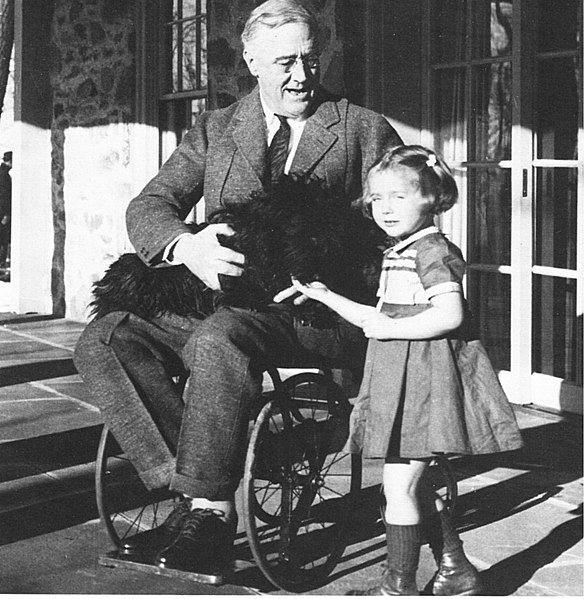
Franklin D. Roosevelt was stricken with polio in 1921. From then on he could only walk with the help of others or the use of crutches. That did not keep him from thinking about feet and walking in politically metaphorical terms. "A radical is a man with both feet firmly planted—in the air," he told a radio audience in the desperate year of 1939. "A conservative is a man with two perfectly good legs who, however, has never learned to walk forward. A reactionary is a somnambulist walking backwards. A liberal is a man who uses his legs and his hands at the behest . . . of his head." Critics howled with disbelief. The federal government was treading all over regular Americans, walking up one side of the common man and down the other.

Eric Arnesen reviews Alan Brinley's biography of FDR over at the Chicago Tribune. He begins with the words of one vociferous critic, who worries that Big Government boots are going to walk all over liberty.

Eric Arnesen, Franklin Delano Roosevelt
By Alan Brinkley
Oxford University Press, 2009, $12.95, 129 pages

At a time of crisis in the American economy, one critic of federal programs charges the administration with stumbling “into philosophies which lead to the surrender of freedom.” It is a “false Liberalism that interprets itself into government dictation,” poisoning “political equality” and “equality of opportunity.” The policies pursed by the administration constitute “the road not to liberty but to less liberty.” What is needed is the “release of the dynamic forces in initiative and enterprise” which “are alone the methods by which these solutions can be found and the purpose of American life assured.”

What had so exercised this critic? The rescue of AIG, the financial sector, and the domestic auto industry? The health care bill that recently emerged triumphant by the narrowest of legislative margins? President Barack Obama’s recess appointments? And just who was so exercised? The Republican National Committee chairman Michael Steele? Former Alaska governor Sarah Palin? A libertarian activist? A tea party-er?

This time, President Obama is off the hook. The contemporary ring of the attack notwithstanding, this denunciation of liberalism and federal authority and celebration of free enterprise is over seventy-five years old. The critic was former President Herbert Hoover; the year 1934. And what so agitated him was President Franklin D. Roosevelt and his New Deal. Just as Obama has his political enemies to the Right, so too did Roosevelt.

Along with Washington and Lincoln, political historian Alan Brinkley observes, Franklin Roosevelt remains for most Americans “part of the triumvirate of our greatest leaders.” The only political figure to be elected president four times, FDR had his work cut out for him: he not only presided over the nation’s most severe economic crisis ever but he successfully led the United States to victory in a bloody world war that threatened to extinguish democracy around the globe. His legacy during “dark and dangerous years” was “extraordinary,” Brinkley reminds us. “No president since the nation’s founding has done more to shape the character of American government.”

Not surprisingly, then, FDR has attracted considerable attention from historians over the decades. From Arthur M. Schlesinger and James McGregor Burns in the 1950s to Conrad Black, Jean Edward Smith, and H.W. Brands in the early 21st century, the 32nd president has been the subject of numerous biographies, some multi-volume and many extremely long. For all of the thousands of pages – tens of thousands, actually – devoted to exploring his life, Roosevelt remains, Brinkley argues, an “enigmatic man” who has “defied the efforts of so many people who have hoped to understand him fully.” read more >>>

Sunday, March 21, 2010

Some Historical Perspectives on National Healthcare

Randall Stephens

Teddy Roosevelt campaigned on health care in his 1912 Progressive Party bid for the presidency. Makes sense. He needed a little medical assistance after surviving a gunshot wound/assassination attempt in Milwaukee: "Friends, I shall ask you to be as quiet as possible. I don't know whether you fully understand that I have just been shot; but it takes more than that to kill a Bull Moose. . . . The bullet is in me now, so that I cannot make a very long speech, but I will try my best."

The Progressive Party platform of 1912 declared: "We favor the union of all the existing agencies of the Federal Government dealing with the public health into a single National health service without discrimination against or for any one set of therapeutic methods, school of medicine, or school of healing with such additional powers as may be necessary to enable it to perform efficiently such duties in the protection of the public from preventable diseases as may be properly undertaken by the Federal authorities . . ."

Two decades later FDR seemed to have thought a national health bill was one bill too many for his already ambitious alphabet soup initiatives.

It then fell to FDR's accidental successor to give it a go. "In my message to the Congress of September 6, 1945, there were enumerated in a proposed Economic Bill of Rights certain rights which ought to be assured to every American citizen." So began President Harry Truman's address to Congress on November 19, 1945.

One of them was: "The right to adequate medical care and the opportunity to achieve and enjoy good health." Another was the "right to adequate protection from the economic fears of . .. sickness ...."

Millions of our citizens do not now have a full measure of opportunity to achieve and enjoy good health. Millions do not now have protection or security against the economic effects of sickness. The time has arrived for action to help them attain that opportunity and that protection. . . .

Our programs for public health and related services should be enlarged and strengthened. The present Federal-State cooperative health programs deal with general public health work, tuberculosis and venereal disease control, maternal and child health services, and services for crippled children. >>>

Didn't work out. Some Republicans equated it with communism and the American Medical Association came out against it.

Indeed, longstanding opposition to federal involvement in health care squelched most efforts. The American Medical Association again stood firm against Lyndon Johnson's landmark 1965 health insurance program. The AMA's chief players backed Barry Goldwater's 1964 campaign, making their criticism loud and clear. The AMA fiercely opposed Medicare. And in the early 1960s, Ronald Reagan warned that after the passage of such a national program, "We will awake to find that we have socialism."

Calvin Woodward offers some useful historical context on the current battle in the Sunday LA Times.

To history, it is likely to be judged alongside the boldest acts of presidents and Congress in the pantheon of domestic affairs. Think of the guaranteed federal pensions of Social Security, socialized medicine for the old and poor, the civil rights remedies to inequality.

Change is coming, it now appears, but in steps, not overnight. . . .

In contrast, on June 30, 1966, after a titanic struggle capped by the bill signing a year earlier, President Lyndon Johnson launched government health insurance for the elderly with three simple words, as if flicking a switch: "Medicare begins tomorrow." >>>

See also: the Boston Globe's (Associated Press) rather interesting timeline of health care legislation; A PBS timeline from Healthcare Crisis; and Jonathan Chait, "Health Care Reform And History," TNR, March 19, 2010.