Showing posts with label Business History. Show all posts

Friday, March 15, 2013

Can Small Town America Support Bookstores? An Owner’s Tale

Philip White
.
Philip White signing copies of his book,
Our Supreme Task, at Well Read, March 2012
The commonly accepted narrative about bookstores is that they’re doomed. People simply won’t go to bricks-and-mortar spaces to buy hardbacks and softcovers when they can pull up a web browser, click or tap a couple of times, and boom! Either an e-book is on their screen or that supposedly archaic bundle of paper is on its way.

But while certain undeniable facts—the closing of Borders and the rise of Amazon as the alpha dog in the bookselling industry among them—prove this impression to be true-ish, there are other signs that cast doubt on it. Some of these are factual and some anecdotal. In the case of the latter, Half Price Books is always jam packed when I go into one of the four Kansas City locations to buy more books I probably don’t need. Also, I recently read The Atlantic’s feature on Ann Patchett, who is not only bankrolling a bookstore in Nashville but also got a spot on the Colbert Report because of it. (I’m not jealous, honest. OK, yeah I am.) Third, I have spoken in four independent bookstores in the past few months and at all but one of my other events (libraries, community groups, etc.) indies provided the books. 

The most recent of my bookstore talks was at Well Read in Fulton, Missouri, a two-story brick building on the very parade route that Winston Churchill took hours before he introduced the world to the terms “iron curtain” (he didn’t invent but popularized it) and “special relationship” in March 1946. Until last year, the store was somewhat disorganized, did little to no marketing and didn’t offer a space for reading or book events. All that has changed since Brian and Danielle Warren took over. I grabbed a few minutes with Brian to talk about book curating, the joy of sifting through boxes of old history books, and why two young, intelligent people took over a used bookshop in a small Midwestern town. 

Wednesday, January 23, 2013

Unsafe in Candy Land

Eric Schultz

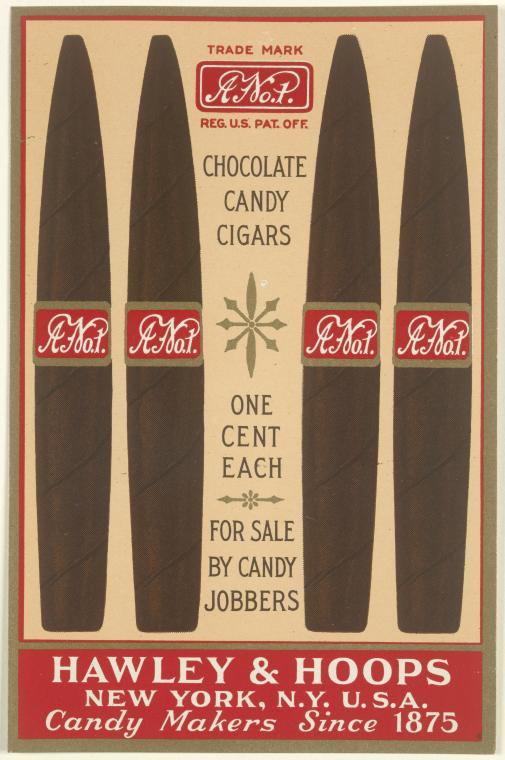
Recently, while researching material on an entrepreneur who launched her candy business at the turn of the twentieth century, I bumped into a series of newspapers articles that reminded me that the past really is a foreign (and often dangerous) land.

In 1900, America’s candy manufacturers boasted $100 million in invested capital and an annual business in candies and sweets that exceeded that of beer, wine and liquor combined.   A British newspaper declared that Americans “make their sweets as we make our bread, practically for a day’s consumption.”  In the days before the 1906 Pure Food and Drug Act, this extraordinary demand for all things sweet attracted swindlers, quacks and crooks.

The damage done was fathomless.  I uncovered article after article about children sickened and killed by adulterated candies throughout the 1890s and early 1900s.  Techniques used by manufacturers were often beyond the pale. Some candy was found to contain fusel oil (an ingredient used at the time in lacquer solvents). Other manufacturers cut their honey with glucose, brightened candies with the use of aniline colors (used in the manufacture of the precursors to polyurethane), and added terra cotta (a clay more often used to make bricks) for bulk and color.  In 1900, the Committee on Manufactures of the U.S. Senate found that condensed milk was among the most commonly adulterated products--except for perhaps extracts of fruit and vanilla, so suspect that only one manufacturer was even willing to allow a factory inspection.

Wednesday, January 9, 2013

Why I Teach Baseball History: A Brief, Self-Serving Manifesto

Chris Beneke

A detail of a print of Union prisoners in a
Confederate camp playing baseball, Salisbury,
N.C., 1863. Courtesy of the Library of Congress.
Very few people ask me why I teach baseball history. It’s obvious. I love baseball. Lots of students love baseball.

But let me offer another explanation, something out of left field: baseball history is also a really effective way of teaching American history.

Before you sport non-enthusiasts get too worked up, let me dispense with the usual caveats. College-level baseball history students shouldn’t memorize how many American League pennants the Yankees won during the 1950s (8) or the last time the Chicago Cubs were major league champions (1908). It’s unnecessary for them to recall that Ted Williams batted .406 in 1941 or that George Foster led the major leagues with 52 home runs in 1977. They could also receive a fine education in baseball history without knowing that Don Larson pitched the only perfect post-season game in 1956 or that Bob Gibson struck out 17 batters in the opening game of the 1968 World Series.

Friday, January 7, 2011

Rural History Suggests Our Food Problems Aren’t New

Dan Allosso

In 1976, John L. Shover traced the rapid change of American agriculture and rural life in the three decades following World War II, in First Majority, Last Minority: The Transforming of Rural Life in America. He called this change the “Great Disjuncture,” and although his name for it didn’t stick, his observations have become widely-accepted truisms. And yet, thirty-five years after its publication, many of the issues Shover calls our attention to in First Majority are farther from resolution than ever.

Shover begins by observing that “emigration from country to city in the years following the Great Depression has been greater in numbers than the entire immigration from foreign shores to the United States in the 100 years between 1820 and 1920.” (xvi) The rural exodus was enabled—actually forced—by increases in productivity. In 1820, Shover says “one farm worker was required to supply subsistence for four people; in 1945 the ratio was 1 for 14.6; in 1969 the estimate was 1 for 45.3.” (5) The first improvement was brought about by tractors and nitrogen fertilizers, Shover says; the second by pesticides, herbicides, and hybrid crops and livestock. Along with these productivity increases went “consolidation. Nine-hundred thousand fewer farms operated in 1970 than in 1960, but virtually all the land except that diverted by government policy, remained in production.” (6)

A lot of the information Shover provides will be well-known to the contemporary reader of agricultural or rural history. But it’s interesting to see how much of the material publicized by others in the last few decades was already being discussed in the 1960s. Shover notes, for example, that “rural America has traditionally been on the move,” (38) and he notes that “surprisingly few studies of American farms and villages have given attention to their ethnic makeup. This lack has produced a myopic view of rural politics, overlooking often intense and deep-seated ethnic and religious rivalries.” (48) Both these observations are still quite relevant for historians and sociologists. Shover also notes that “the major market for motor vehicles shifted between 1905 and 1908, from the big city to the country town.” (116)

Perhaps the most interesting aspect of First Majority, which is fascinating precisely because the book is a generation old, is Shover’s coverage of agribusiness. Recent bestsellers like Michael Pollan’s Omnivore’s Dilemma, documentaries like Food, Inc. and King Corn, and the recent Justice Department/USDA probes of Walmart’s “stranglehold” on rural communities, have sensitized us to problems facing food producers and rural Americans, but may also have created an impression that these issues and crises are recent. (See also, Heather's post from early November, "Corn in the USA.") In fact, Shover was calling attention to the same problems 35 years ago. In 1968, he says, “the 1 percent of the feedlots that have a capacity greater than 1,000 fed 47 percent of the cattle marketed.” (160) Poultry consumption, which had been stable at about 16 pounds per person in the first half of the twentieth century, rose to 50 pounds per person in the early 1970s. (146) And even then, the industry was already dominated by “producer corporations” that paid the “farmer-caretaker in 1972 . . . fifty dollars for every 1,000 chickens he raised.” (146)

By 1970, the declining power of farm operators relative to their corporate overlords was already apparent. In a 1970 report, the USDA declared that “poultry growers were working at an average wage of minus fourteen cents hourly.” (My emphasis, 147) “Us folks in the chicken business are the only slaves left in the country,” Shover quotes an Alabama striker saying. “They call all the shots—they give you a contract for as many or as few chickens as they want and then they pay you whatever they want.” (147) Shover also called attention to the environmental cost of agribusiness. “In 1969,” he says, “the nation’s 107 million cattle, 57 million hogs, 21 million sheep, and 2.1 billion chickens produced approximately ten times more biological waste than the entire human population.” (161) And the factory farms were just getting going!

While the producer’s share of the food dollar “pie” wasn’t as low in the 1960s as it has become, the growing slice taken by manufacturers and marketers was already a concern. “Thus in 1969,” Shover says, “farmers received 67c of every consumer dollar spent on eggs . . . 50c for milk; 22c for fresh oranges; 14c for two loaves of bread . . . Producers of wheat and cotton could give away their entire crop free without creating more than a minor effect on the price of bread or shirts.” (177) The fact that these problems have been known for decades, and during that time the situation has only gotten worse, should concern today’s activists. Shover shows some of the changes rural historians were beginning to explore in the mid-1970s, in the last few years before the election of Ronald Reagan and the political sea-change it brought about or reflected.