Showing posts with label Conferences. Show all posts

Wednesday, January 8, 2014

Live-Tweeting #AHA2014

Craig Gallagher

In anticipation of going to my first American Historical Association conference this past weekend in Washington D.C., I sought out a range of senior colleagues who had attended past AHA meetings for advice on what to expect. As a third-year Ph.D. candidate who is about to start writing a dissertation, I was regularly advised that many aspects of the AHA meeting did not yet apply to me, such as the Job Center, where interviews for academic positions are conducted, or the Book Exhibit where publishers meet with scholars and teachers to discuss manuscripts or books for use in the classroom.

My first AHA, therefore, was largely confined to the scholarly panels (and, I should add as a brief aside, various receptions, where I shamelessly handed out business cards and tried to score five minutes of chat with some of my favorite scholars. I was mostly successful). I attended six different panels over the four days, enjoying some immensely and others not-so-much. On the whole, I was impressed with the range of questions posed by various luminaries in my field, and – especially in the Atlantic History panels I was most interested in – the sweeping state-of-the-field discussions most papers engendered.

Thursday, August 15, 2013

CFP: “Soundscapes: Music from the African Atlantic, 1600-present,” March 7-9, 2014


The Carolina Lowcountry and Atlantic World Program (CLAW) at the College of Charleston in Charleston, South Carolina invites paper proposals addressing the transnational and transcultural impacts of music throughout the Atlantic World for a conference to be held
March 7-9, 2014.  We are especially interested in twentieth and twenty-first century music and cultural exchange, but the conference is open to any work that examines the movement of music in the Atlantic World from the 1600s to the present. We welcome a broad range of submissions, but especially encourage submissions that utilize an interdisciplinary approach.  Proposals may address any area of music in the Atlantic World. We invite scholars to submit proposals for individual papers and panels that address such questions as:

* Tradition and modernity in popular and indigenous music in Latin America, the Caribbean and West Africa
* Music, Race, and Empire
* Jazz in a global context
* Trans-Caribbean identities in Salsa, Reggae, and Calypso music
* Pan-African Rhythms
* Caribbean beats and protest music in the 1970s
* The British Invasion and Rhythm and Blues in the United Kingdom
* Hip Hop and political activism in Africa and the Caribbean
* Race and Beach Music on the American Atlantic Coast
* Musical culture and diaspora studies


Proposals Due:  Friday, December 6, 2013

All Presenters will be notified if their paper or panel has been accepted by December 22, 2013.  Presenters and participants are expected to register for the conference by February 7th, 2014.  Registration will open in October 2013.

As with previous successful CLAW program events the conference will be run in a seminar style: accepted participants will be expected to send completed papers to the organizers in advance of the conference itself (by February 28th, 2014) for circulation via password-protected site. At the conference itself presenters will talk for no more than ten minutes about their paper, working on the assumption that everyone has read the paper itself. This arrangement means that papers may be considerably lengthier and more carefully argued than the typical 20-minute presentation; and it leads to more substantive, better-informed discussion. It also generally allows us to move quite smoothly toward publication of a selection of essays with the University of South Carolina Press.

Proposals for individual papers should be 200 words, and should be accompanied by a brief one-page biographical statement indicating institutional affiliation, research interests, and relevant publishing record for each participant, including chairs and commentators. Please place the panel proposal, and its accompanying paper proposals and vitas in one file. Please submit your proposal electronically with CLAW conference in the subject line to the conference chair, Dr. John White at WhiteJ@cofc.edu by December 6, 2013.

If you wish to send a proposal for a 3 or 4 person panel, please send a 300 to 500 word proposal describing the panel as a whole as well as proposals for each of the individual papers, along with biographical statements for each of the presenters. The organizers reserve the right to accept individual papers from panel proposals, to break up panels, and to add papers to panels. Notification of acceptance will be sent by December 22nd, 2013.

Monday, May 27, 2013

Accurate History for Activists

Dan Allosso

I spent last weekend in the Twin Cities, doing a radio interview about my book and giving a talk on freethought history at the monthly meeting of the Minnesota Atheists.  At roughly

the same time, Susan Jacoby was a featured speaker at the second annual Women in Secularism conference in Washington, DC.  A couple of people live-blogged Jacoby’s talk (here and here). Reading these transcripts and thinking about my own weekend as a presenter has changed my perspective on the role of historians in public discourse.

According to a bio produced for Bill Moyers’ website on PBS, Susan Jacoby

began her writing career as a reporter for THE WASHINGTON POST, is the author of five books, including WILD JUSTICE, a Pulitzer Prize finalist. Awarded fellowships by the Guggenheim Foundation, the National Endowment for the Humanities and the New York Public Library's Dorothy and Lewis B. Cullman Center for Scholars and Writers, she has been a contributor to THE NEW YORK TIMES, THE WASHINGTON POST, THE NATION, TomPaine.com and the AARP BULLETIN, among other publications. She is also director of the Center for Inquiry-Metro New York and lives in New York City.

Wednesday, March 6, 2013

The Society for US Intellectual History: An Interview

Randall Stephens

Since 2007 the US Intellectual History (S-USIH) blog has nurtured a lively community of historians. Since then that virtual group has morphed into a series of annual conferences and the Society for US Intellectual History. The revamped S-USIH site is a real model for digital humanities and shows how best to foster conversations within a field. The blog features book reviews, op-eds, think pieces, and essays that frequently spark heated debates in the comments section. (Like many U.S. historians I’ve watched all this with real interest—reading, lurking, and occasionally commenting on posts.)

To find out a little bit more about how the website has led to a vibrant Society and what the group does, I recently caught up with key members and founders: Andrew Hartman (Illinois State University), Tim Lacy (Loyola University), Benjamin Alpers (University of Oklahoma), and Ray Haberski (Marian University).

Randall Stephens: The US Intellectual History blog started in 2007. Why did you and others launch it?

Andrew Hartman: Tim [Lacy] got the ball rolling by issuing a call to the H-Ideaslistserv. I answered that call, which was to form a community of U.S. intellectual historians in some fashion, because I felt like I had few people to talk to about my work and about the type of history I was most interested in doing. I was in my first year as an assistant professor, and was already missing my graduate school community, and was looking for some way to replicate that. I don't exactly remember why we decided a blog was the best way to build community—at that time, I didn't even read academic blogs—but in retrospect it was a great decision.

Friday, February 22, 2013

History Conferences at Northumbria University, July 2013

Randall Stephens

The Tyne Bridge
It will be a busy summer at Northumbria University (Newcastle Upon Tyne).  My new colleagues in History and American Studies are bringing two large conferences to the university. Come mid-summer the campus will be abuzz with historians, foreign policy experts, economists, sociologists, and likely more tweed and elbow patches than you can shake a stick at.

First, the university will host the annual meeting of the Historians of Twentieth Century United States (HOTCUS).  HOTCUS, according to the organizations website, promotes "scholarship in the field of twentieth century American history. It has strong links with the British Association for American Studies and is the major academic organization for historians of modern America." Professor Wesley Hogan (Virginia State University) will deliver the plenary lecture: "'You Have to Stand Up, You Don't Have to Survive:’ Civil Rights and Memory in the United State." (The proposal deadline has passed, but booking is still open.)

Not long after the HOTCUS meeting, the annual conference of Transatlantic Studies Association (TSA) will convene at Northumbria from 8 - 11 July 2013.  A little more about it:
 
The TSA exists to provide focus for transatlantic area studies and bring together scholars from different disciplines in order to further research and understanding of transatlantic relations. It has strong links with the US Embassy, British Academy, Failte Ireland, and NATO attracting members from North America, Europe, and Asia. The TSA is also the societal body responsible for publishing the Journal of Transatlantic Studies.*

Plenary Speakers will be Donna Alvah (St Lawrence University, New York) and Michael Clarke (RUSI).

The deadline for proposals is April 30, 2013.

Thursday, November 15, 2012

No Person Shall Bee Any Wise Molested: Religious Freedom, Cultural Conflict, and the Moral Role of the State

.
A conference planned for October 3 - 6, 2013, in Newport and Providence, Rhode Island, organized by the Newport Historical Society, the Pell Center for International Relations and Public Policy, Salve Regina University, the George Washington Institute for Religious Freedom, the John Carter Brown Library, Brown University and the Rhode Island Historical Society to mark the 350th anniversary of the 1663 Rhode Island Charter.

What is religious toleration? What are its functions, effects, and limits in society? How has it
manifested (or not) around the world in human history?

The 1663 Rhode Island Charter stipulated that no person "shall bee any wise molested,
punished, disquieted, or called in question, for any differences in opinione in matters of religion." This charter famously ignited the "lively experiment" that both reflected and shaped religious and political developments in the early modern world and has continued to influence global conversations about the role of toleration and religious freedom. The 350th anniversary of this charter provides a timely point of entry into a thoughtful consideration of a far larger set of questions about religious freedom in particular historical and present day contexts.

Thursday, November 10, 2011

Conference on Public Intellectuals, Harvard, 2012

.
Third Annual Conference on Public Intellectuals
History of Science Department
Harvard University
April 12-14, 2012

Call for Papers

Since the 1950s, American writers and thinkers such as Irving Howe, Kenneth Clark, Russell Jacoby, Thomas Bender, bell hooks, Richard Posner, Toni Morrison, Thomas Sowell, and Cornel West have debated the meaning and purpose of public intellectuals. Many have openly criticized what they call the increasing corporatization of public intellectual life within the academy. Increasing specialization and narrower disciplines, some argue, has led to a growing paucity of radical ideas and a growing obsession with a mass media-infused culture. Others on the ideological right maintain that leftist public intellectuals do not pay enough attention to market forces and are too protected by and safely ensconced in tenured ivory towers, writing and teaching only to indoctrinate their students.

This conference seeks to bring together scholars and researchers in all disciplines whose work focuses on public intellectuals. We hope to engage these issues while moving beyond past debates into new questions on the role of public intellectual life in the 21st century. Paper topics on all global areas as well as the U.S. are welcome. The conference also seeks to provide a forum for self-reflection by public intellectuals in the past and present. The conference format will include individual presentations organized into workshops of 3-4 presenters and three special roundtable sessions.

Proposals of 300 words or less must include your identifying information including name, title, institution, email, and phone number. Please send two copies to the co-organizers, Larry Friedman (ljfriedm@indiana.edu) and Damon Freeman (dfreeman@sp2.upenn.edu).

Deadline for paper and panel proposals: Wednesday, November 30.

Tuesday, October 18, 2011

Submit a Paper or Panel for the 2012 Historical Society Conference

Randall Stephens

It's not too late to submit a paper or a panel proposal for the 2012 Historical Society Conference in Columbia, SC, Thursday, May 31st - Saturday, June 2nd, 2012.

But the deadline, December 1, will soon be upon us! Here's the CFP:

Professional historians in the United States are increasingly being called upon to produce more “popular,” more accessible history. How do and how should academic historians reach popular audiences? How and to what extent is “popular” history written around the world? Does the meaning of and audience for “popular history” vary from place to place? Along with professional historians, states, elites, and a variety of interest groups have long had an interest in sponsoring, supporting, and generating historical knowledge for popular and other audiences. We seek paper and panel proposals that will consider “popular” history in its various guises and locales. How and to what extent is the interest in “popular” history genuinely new? How do and how should historians interact with television and movie production or write op-ed pieces or blogs or serve as expert witnesses? Is there such a thing as a truly “popular” history? Do we need a distinctive “popular” history and are historians properly equipped to write it?

We especially encourage panel proposals, though individual paper proposals are welcome as well. And our interpretation of “panel” is broad: 2 or more presenters constitute a panel—chairs and commentators are optional. As at past conferences, we hope for bold yet informal presentations that will provoke lots of questions and discussion from the audience, not presenters reading papers word-for-word from a podium followed by a commentator doing the same.

Please submit proposals (brief abstract and brief CV) by
December 1, 2011 to Mark Smith and Dean Kinzley,
2012 Program Chairs, at jslucas@bu.edu

Tuesday, August 2, 2011

2012 Southern Historical Association Meeting

Randall Stephens

The 78th Annual Meeting of the Southern Historical Association will be in Mobile, Alabama, November 1-4, 2012. The deadline for submitting a proposal for the 2012 meeting of the Southern Historical Association is about one month away. There's still plenty of time to submit a paper or a session. Program directors Marjorie Spruill and Don Doyle hope to "create a rich and broad program for 2012 by soliciting exciting proposals."

Here's the general note about the Mobile conference:

The Program Committee for 2012 invites proposals on all topics related to the history of the American South from its pre-colonial era to today. In addition, for the 2012 meeting in Mobile, it extends a special welcome to proposals relating to:

~ Mobile and the Gulf South

~ International, transnational, or comparative approaches

~ 2012 as an anniversary of major historical events, publications, etc.

The Program Committee accepts proposals for single papers but encourages session proposals that include two or three papers. Individuals interested in using the SHA website to organize a session with complementary papers may send an e-mail to Sheree Dendy with their name, e-mail address, and proposed paper topic. She will post this information on the SHA website, which others seeking compatible co-panelists may consult. Click to view current postings of those seeking related proposals.

According to SHA policy, no one who appeared on the previous two programs, those at Charlotte and Baltimore, can be part of the program in Mobile.

Note: A New Policy for the 2012 Program Committee: Those submitting proposals should include suggestions of people who would be appropriate as commentators/chairs but not issue invitations. The Program Committee will select and invite a chair and usually two commentators. No two people from the same institution can be on the same session.

All 2012 proposals must be submitted online.

If you are interested in submitting a session for the Latin American and Caribbean Section, please visit their web site.

Monday, April 11, 2011

Historians as Public Intellectuals

Randall Stephens

Our first session of the Second Annual Conference on Public Intellectuals (James Hall, Harvard) dealt with a theme that would interest readers of this blog. Thanks are due to all those who took part. Historian Larry Friedman (Harvard's Mind/Brain/Behavior Interfaculty Initiative) deserves special thanks for making this and last year's conference so productive.

9:00 - 12:00pm: Panel 1: HISTORIANS AS PUBLIC INTELLECTUALS
James Hall 1305

Chair: Jill Lepore (Harvard University)


Bertram Wyatt-Brown (Johns Hopkins University), “C. Vann Woodward and W.J. Cash: Similarities and
Contrasts”

Joyce Antler (Brandeis University), “Gerda Lerner, Citizen-Scholar: ‘Why What We Do with History
Matters’”

Ray Arsenault (University of South Florida), “The Freedom Writer: John Hope Franklin as a Public Intellectual”

The three presenters spanned the career's of historians who wrote and spoke to a large public. All had a very interesting, complex relationship with the American past, and, even had a moralist tone to some of their work. Jill Lepore (Harvard) offered comments before our general discussion. Lepore wondered about how the public reacted to each historian and how they encountered opposition. All of these figures spoke to a large audience and, at times, faced opponents. Gerda Lener, said Antler, encountered Nazi and anti-communist hostility in Europe and America. Wyatt-Brown mentioned that W. J. Cash, not long before his suicide, had a deep sense of persecution, largely imagined, which had spun off into delusion. Arsenault pointed out that there was less persecution in Franklin's case. Though Franklin long resented the exclusion and discrimination he faced in his early years. Bill Clinton eulogized Franklin at his funeral, said Arsenault, as: "a genius in being a passionate rationalist, an angry happy man, a happy angry man."

Like John Hope Franklin, Lerner, Woodward, and Cash all struggled with the burdens of the past and understood history in light of present divisive political and identity struggles. How does a public intellectual historian relate the past to the present?

Hence, there was a brief discussion after the presentations about how each of these dealt with a usable past. Most know, for instance, that Woodward, Franklin, and Lerner had an enormous influence on the field and well beyond it. C. Vann Woodward's Strange Career of Jim Crow (as I mentioned on this blog not long ago) powerfully affected Martin Luther King and other civil rights leaders. Gerda Lerner established the first Women's Studies program in the country and served as a role model for thousands of scholars in history and the humanities. And John Hope Franklin turned the public's attention to some of the most desperate moments in American history. Does advocacy history differ from the history written by the deeply committed historicist? The audience and participants considered the work of Howard Zinn and other historian-activists in light of that question.

Like the other panels at this small conference (really like the best kind of grad seminar in its freewheeling discussions) wonderfully illuminated the role of the public intellectual. Later panels on race, religion, the cosmopolitan generation, and a discussion with Robert Jay Lifton further plumbed the areas where scholars interact with a larger public. (Keep an eye out for Lifton's memoir, which he spoke about, due out in June. It will be well worth reading!)

Wednesday, March 16, 2011

The Historical Society's 2012 Conference

Popularizing Historical Knowledge: Practice, Prospects, and Perils

Columbia, SC, Thursday, May 31st - Saturday, June 2nd, 2012

Professional historians in the United States are increasingly being called upon to produce more “popular,” more accessible history. How do and how should academic historians reach popular audiences? How and to what extent is “popular” history written around the world? Does the meaning of and audience for “popular history” vary from place to place? Along with professional historians, states, elites, and a variety of interest groups have long had an interest in sponsoring, supporting, and generating historical knowledge for popular and other audiences. We seek paper and panel proposals that will consider “popular” history in its various guises and locales. How and to what extent is the interest in “popular” history genuinely new or does it have a deeper genealogy? How do and how should historians interact with television and movie production or write op-ed pieces or blogs or serve as expert witnesses? Is there such a thing as a truly “popular” history? Do we need a distinctive “popular history” and are historians
properly equipped to write it?

We especially encourage panel proposals, though individual paper proposals are welcome as well. And our interpretation of “panel” is broad: 2 or more presenters constitute a panel—chairs and commentators are optional. As at past conferences, we hope for bold yet informal presentations that will provoke lots of questions and discussion from the audience, not presenters reading papers word-for-word from a podium followed by a commentator doing the same.

Please submit proposals (brief abstract and brief CV) by December 1, 2011 to Mark Smith and Dean Kinzley, 2012 Program Chairs, at jslucas@bu.edu.

Saturday, March 5, 2011

Second Annual Conference on Public Intellectuals at Harvard University

Randall Stephens

I've been working with Larry Friedman and Steve Whitfield on organizing the Second Annual Conference on Public Intellectuals at Harvard University, April 7-9, 2011. The program has shaped up nicely. Those who attended last year can attest to the lively discussions and debates generated by panels and keynotes. (We've asked all participants this year to pay a $25 fee. Friedman hopes to have funding options in the future, which might reduce or eliminate the fee.)

The 2011 conference will feature a variety of session that are sure to be productive. (See the program below.) Panels will address "Historians as Public Intellectuals," "The Cosmopolitan Generation of Intellectuals," "Religion and Public Intellectuals in America," and "Race, Gender, and Public Intellectuals." We anticipate roughly 20 participants and a number of non-presenters.

SECOND ANNUAL CONFERENCE ON PUBLIC INTELLECTUALS, APRIL 7-9, 2011

Thursday, April 7

4:00 - 6:00: OPENING RECEPTION
Larry Friedman’s house, 335 Highland Avenue, Somerville (a 10-minute walk from the Davis Square stop on the Red Line T)

7:00 - 9:30pm: OPENING SEMINAR
James Hall penthouse seminar room, 33 Kirkland Street, Cambridge (please read James Kloppenberg’s Reading Obama: Dreams, Hopes, and the American Political Tradition in advance)

Introduction: Larry Friedman (Harvard University)

James Kloppenberg (Harvard University), “Reading Obama”

Comment: Dinesh Sharma (Institute for International and Cross-Cultural Research)

Friday, April 8

8:30 - 9:00am: Conference Chair: Anne Wyatt-Brown (University of Florida), welcome; coffee, tea, bagels, pastries, etc. provided.
James Hall 1305

9.00 - 12.00pm: Panel 1: HISTORIANS AS PUBLIC INTELLECTUALS
James Hall 1305

Chair: Jill Lepore (Harvard University)

Bertram Wyatt-Brown (Johns Hopkins University), “C. Vann Woodward and W.J. Cash: Similarities and Contrasts”

Joyce Antler (Brandeis University), “Gerda Lerner, Citizen-Scholar: ‘Why What We Do with History Matters’”

David D. Hall (Harvard University), “Perry Miller: Prophecy, Declension, and the Promise of America”

Ray Arsenault (University of South Florida), “The Freedom Writer: John Hope Franklin as a Public Intellectual”

12:00 - 1:15pm: Lunch on your own

1:15 - 4:30pm: Panel 2: THE COSMOPOLITAN GENERATION OF INTELLECTUALS
James Hall penthouse seminar room

Chair: David Starr (Brandeis University), with remarks on Solomon Schechter

Neil McLaughlin (McMaster University), “Fromm, Riesman, Nisbet and the Public Intellectuals: A Sociological Perspective”

Anke Schreiber (University of Chicago), “Erich Fromm as Public Intellectual”

David Andersen (Helena, Montana), “Three 1950s Classics: Ralph Ellison’s Invisible Man, Erik Erikson’s Childhood and Society, and Hannah Arendt’s Origins of Totalitarianism”

Jonathan B. Imber (Wellesley College), “Philip Rieff and Fellow Teachers”

4:30 - 5:30: Break

5:30 - 9:15pm: DINNER AND A CONVERSATION WITH GERDA LERNER AND ROBERT LIFTON
James Hall penthouse seminar room

6:30 - 6:50pm: Gerda Lerner (Madison, Wisconsin) on her life as a scholar and public intellectual (Skype video connection)

7:00 - 8:30pm: Robert J. Lifton (Harvard University) on his life and career

Saturday, April 9

8:30am: Coffee, tea, bagels, pastries
James Hall penthouse seminar room

9:00 - 12:00pm: Panel 3: RACE, GENDER, AND PUBLIC INTELLECTUALS
James Hall penthouse seminar room.

Chair: Roberta Wollons (University of Massachusetts Boston)

Mark West (University of North Carolina at Charlotte), “The Literary Roots of Theodore Roosevelt's Views on Women’s Rights”

Steve Whitfield (Brandeis University), “The Many Facets of Frank Tannenbaum”

Damon Freeman (University of Pennsylvania), “Kenneth B. Clark and the Just University”

Jim Clark (University of Kentucky), “‘In the South these Children Prophesy’: Robert Coles’ Documentary Argument”

12:00 - 1:30pm: Lunch on your own

1:30 - 4:30pm: Panel 4: RELIGION AND PUBLIC INTELLECTUALS IN AMERICA
James Hall penthouse seminar room

Chair: Jon Roberts (Boston University)

Maura Jane Farrelly (Brandeis University), “No Man is an Island: Catholic Clerics and the Perils of Public Intellectualism”

Bo Peery (George Washington University), “On ‘Doing Nothing’: Richard and Reinhold Niebuhr Debate the Merits of Taking Action in a Tumultuous World”

Randall J. Stephens (Eastern Nazarene College), “The Public Intellectual and the Public Anti-Intellectual: The Life of the Mind among Conservative Evangelicals”

Ronald E. Doel (Florida State University), “Religion, Science, and Cold War Visions: J. Lawrence Kulp and the Challenge of 20th Century Biography”

4:30 - 5:00pm: Break

5:00 - 6:30pm: CONCLUDING ROUNDTABLE WITH ALL CONFERENCE PARTICIPANTS: “WHAT DOES IT MEAN TO BE A PUBLIC INTELLECTUAL?”
James Hall penthouse seminar room

For final discussion please read pre-circulated material: Lawrence J. Friedman, “Public Intellectuals on Philanthropy,” in Philanthropy in America: A Comprehensive Historical Encyclopedia, ed. Dwight F. Burlingame (ABC-CLIO, 2004), 390-402; David A. Hollinger, “How Wide the Circle of the ‘We’? American Intellectuals and the Problem of the Ethnos since World War II,” American Historical Review (April, 1993); and selection from, Russell Jacoby, The Last Intellectuals: American Culture in the Age of Academe (Basic Books, 1987)

7:30pm: Dinner at Chang Sho, 1712 Massachusetts Avenue, Cambridge, MA 02138

All participants are asked to contribute $25 per person toward the cost of the conference.

Tuesday, December 21, 2010

Boston's Best Bookstore

Randall Stephens

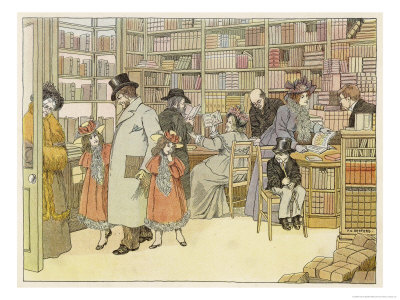
Coming to the 2011 AHA in Boston? Have a moment or two to spare? Check out the Brattle Book Shop, near the Downtown Crossing and Park Street T stops. The store is one of the oldest in the country and is brimming with books, old and new. Sections on 19th-century history, European studies, Asian history, New England history, religious history, African-American studies, ethnicity, political science, and on and on line what seem like miles of shelf space.

I’m particularly fond of the outdoor area, which contains thousands of books for as little as $1 to $5 each. (See the video I shot, embedded below.) That space is open all year round, only closing when it rains or snows. (After a long Boston walk with my border collie Beatrice, I’ll peruse titles until Bea begins to whimper out of sheer boredom.)

As Beatrice waits impatiently, I’ve been surprised by how many great history titles I’ve found outside. I’ve picked up books there by Allan Nevins, Oscar Handlin, Gordon Wood, Pauline Maier, Patricia Bonomi, and many more. Also, I’ve been happy to track down unusual 19th-century travel accounts, memoirs, primary source collections, and all manner of biographies.

Brattle Book Shop is real must-see for history bibliophiles!

I asked Ken Gloss, proprietor, about his store and what a history professor, grad student, or history enthusiast might find there.

Randall Stephens: What makes the Brattle Book Shop unique? What would you say are some of its most distinctive features?

Kenneth Gloss: The Brattle Book Shop can be traced back to the 1820s and it’s been in my family since 1949. It is a Dickensian-style store. The outside stands hold about 2,000+ books at $1, $3, and $5. We have two floors of general used books, and a third floor with rare books, 1st editions, leather-bound volumes, manuscripts, etc.

We go to estates throughout New England almost every day. It is like being Jim Hawkins on Treasure Island finding great books and libraries and then bringing them back to the shop.

You never know what is new to the shop on
any given day.

Stephens: What sort of clientele do you serve? Does the Brattle Book Shop have a typical customer?

Gloss: We have every type of customer you can imagine. We’ve got street people who buy from our $1 tables, collectors who spend large sums on rare letters, manuscripts, rare editions, and the customer who just wants a hard-to-find volume. They are young, old, male, female, regular, one-time, compulsive, and interesting. We have one customer who comes in every day and calls in sick when he cannot get in.

Stephens: Many historians that I know keep an eye out for that gem of a book. What sorts of books at Brattle would catch the eye of a historian on the lookout for a bargain or a rarity?

Gloss: We buy and put out books each day. Many of those are by amateur historians, professors, and writers. So you never know what will be on the shelves. That is what keeps people coming. There are also many, many bargains.

Wednesday, December 15, 2010

Myths of World War II: A Lecture

Donald Yerxa

Although some have questioned the health of the field of military history in today’s academy, there is no doubt that outstanding work is being done in military and naval history these days. A number of forums, essays, and interviews appearing in Historically Speaking over the past couple of years attest to this. And there has been outstanding work done especially on World War II.

I would like to alert readers of the blog to a major event in academic military history that will occur next month at the American Historical Association meeting in Boston. Gerhard L. Weinberg will give the Annual George C. Marshall Lecture on Military History (sponsored by the George C. Marshall Foundation and the Society for Military History) on Saturday, January 8, 2011, 5:00 PM-6:30 PM in Marriott Boston Copley Place’s Grand Ballroom Salon F. A reception will follow in nearby Grand Ballroom Salon E.

Weinberg, an emeritus professor of history at the University of North Carolina, is an internationally recognized authority on Nazi Germany and the origins and course of World War II. His lecture, “Some Myths of World War II,” will examine some widely shared myths of the war—ones pertaining to the war as a whole as well as some about individual leaders and groups of individuals. Included among the latter will be Adolf Hitler and his generals, Winston Churchill, Benito Mussolini, Josef Stalin, Franklin Roosevelt, and Yamamoto Isoroku. Weinberg’s talk will also touch on such issues as the Yalta Conference and the Morgenthau Plan. As the war recedes in time, much new information has become available, but certain myths enjoy a long life.

Brian Linn, the president of the Society for Military History and a frequent contributor to Historically Speaking, invites interested historians to attend the lecture and reception. It is a great opportunity to meet new people, talk about military history, and learn about what is going on in the field.

Thursday, October 21, 2010

Religious History at the American Academy of Religion Meeting, Atlanta, Oct 30-Nov 1, 2010

Randall Stephens

I paste below some of the history-related sessions at the 2010 AAR meeting. There are quite a few others, but this gives an idea of how history plays out at the meeting. The program is searchable here.

Saturday 9:00 AM to 11:30 AM
Location: Marriott Marquis - L405-406
Missionary Innovation: African-American Religion and the New South

Presiding
* Josef Sorett, Columbia University

Presenters
* Lerone Martin, Emory University
Selling to the Souls of Black Folk: Atlanta, the Phonograph, and the Transformation of American Religion and Culture, 1920–1941

* Elizabeth Jemison, Harvard University
Writing and Righting Race: Women’s Interracial Cooperation in the Colored Methodist Episcopal Church and Methodist Episcopal Church, South

* Brandi Hughes, University of Michigan
(En)Gendering the Trans-Nation: The Missionary Sojourns of Black Womanhood from Atlanta through Monrovia

* Brandon Winstead, Garrett-Evangelical Theological Seminary
“We are Responsible to God”: Black Nazarene Women’s Theology of Evangelistic Responsibility and Its Relationship to Their Contributions to the Church of the Nazarene’s Gulf Central District, 1953–1969

Responding
* Paul Harvey, University of Colorado

Saturday 1:00 PM to 3:30 PM
Location: Hyatt Regency - Hanover E
Author Meets Critics: Thomas A. Tweed’s Crossing and Dwelling (Harvard University Press, 2008)

Presiding
* Daniel Ramírez, University of Michigan

Panelists
* Richard Callahan, University of Missouri
* Marie Marquardt, Agnes Scott College
* Grant Wacker, Duke University

Responding
* Thomas A. Tweed, University of Texas

Saturday 1:00 PM to 3:30 PM
Location: Hyatt Regency - Hanover FG
Defining Religious Freedom: Reading Tisa Wenger’s We Have a Religion: The 1920s Pueblo Indian Dance Controversy and American Religious Freedom (University of North Carolina Press, 2009)

Presiding
* Ines M. Talamantez, University of California, Santa Barbara

Panelists
* Quincy Newell, University of Wyoming
* Greg Johnson, University of Colorado
* Kenneth Mello, Southwestern University

Responding
* Tisa Wenger, Yale University

Saturday 1:00 PM to 3:30 PM
Location: Hyatt Regency - Hanover C
The Lutheran Tradition: New Theological and Global Perspectives
Presiding
* Kirsi Irmeli Stjerna, Lutheran Theological Seminary, Gettysburg

Presenters
* Farisani Elelwani, University of South Africa
The Challenges Facing Lutherans in South Africa

* John Reynolds, Union Theological Seminary
The Heart in Sixteenth Century Physiology and the Role of Luther’s Theology in the Life of the Believer

* Hans Schwarz, University of Regensburg
Martin Luther’s Reception in Korea

* Cecilia Nahnfeldt, Karlstad University, Sweden
Lutheran Vocation and Gender Relations

Saturday 4:00 PM to 6:30 PM
Location: Marriott Marquis - L507
Seminar on Religion in the American West

Presiding
* Jane Naomi Iwamura, University of Southern California

Presenters
* Travis Ross, University of Nevada, Reno
Sectionalism in California’s Religious Periodicals: Place in Religious Rhetoric

* Jonathan William Olson, Florida State University
“Not Merely Asiatic but Pagan”: Religion, Chinese Exclusion, and the American West

* Barry Joyce, University of Delaware
Creating an Axis Mundi in the American Southwest: Religion, Science, and the Sacred at the Chaco Culture National Historical Park

* Brett Hendrickson, Arizona State University
Mexican-American Religious Healing and the American Spiritual Marketplace

Responding
* Tisa Wenger, Yale University


Sunday 3:00 PM to 4:30 PM
Location: Hyatt Regency - Hanover AB
Keywords in the Study of North American Religion: Anthropomorphism, Agency, and Vernacular

Presiding
* Gary M. Laderman, Emory University

Presenters
* W. Clark Gilpin, University of Chicago
Anthropomorphism: Human Connection to a Universal Society

* Elizabeth Jemison, Harvard University
Writing Agency: Reconsidering Agency in the Study of American Religion

* Rachel Lindsey, Princeton University
The Light of the World: Vernacular Photography and American Religion, 1839–1910

Monday 9:00 AM to 11:30 AM
Location: Marriott Marquis - M101
The Future of Southern Religious History

Presiding
* Paul Harvey, University of Colorado

Panelists
* Alison Greene, Yale University
* Michael Pasquier, Louisiana State University
* Randall Stephens, Eastern Nazarene College
* Curtis Evans, University of Chicago
* Ted Ownby, University of Mississippi

Responding
* Lauren Winner, Duke University

Monday 1:00 PM to 3:30 PM
Location: Marriott Marquis - M103-104
How Has Orsi’s Madonna of 115th Street Affected the Way We Think about Religion?

Presiding
* David Harrington Watt, Temple University

Panelists
* Judith Weisenfeld, Princeton University
* Stephen J. Stein, Indiana University
* Kathryn Lofton, Yale University
* Leigh E. Schmidt, Harvard University

Responding
* Robert Orsi, Northwestern University

Thursday, October 14, 2010

Third Annual U.S. Intellectual History Conference

.
A notice from Andrew Hartman, organizer of the Third Annual U.S. Intellectual History Conference. The schedule looks tremendous. Well worth a visit to the Big Apple.

The Third Annual U.S. Intellectual History Conference be held on October 21-22, 2010 in New York City. The Conference is being organized by the editors of the U.S. Intellectual History (USIH) blog in coordination with the City University of New York's Center for the Humanities (The Graduate Center). This year’s theme is “Intellectuals and Their Publics.”

Beyond dozens of exciting and relevant sessions, I would especially like to call attention to our keynote speaker and our two evening plenary sessions.

The keynote will be given by Harvard University Professor James Kloppenberg on Friday (Oct. 22) afternoon. Kloppenberg will be presenting from his book, "Reading Obama: Dreams, Hope, and the American Political Tradition," forthcoming from Princeton University Press.

The first plenary session, on Thursday (Oct. 21) evening, is on "Renewing Black Intellectual History," featuring Adolph Reed, Jr., Kenneth Warren, Dean Robinson, and Touré Reed. Based on an anthology of same title, this plenary seeks to map the changing conditions of black political practice and experience from Emancipation to Obama.

The second plenary session, on Friday (Oct. 22) evening, is titled, "Intellectual History for What?" It includes George Cotkin, Rochelle Gurstein, Elisabeth Lasch-Quinn, Wilfred McClay, David Steigerwald, and Casey Nelson Blake, who will raise a number of questions involving the relationship between intellectual history and less specialized audiences and genres of expression, including: intellectual history and social/cultural criticism; intellectual history as a resource for moral reflection and edification; writing for, teaching, and speaking to generalist audiences; and the ambiguous position of intellectual history within the research university.

Other notable participants include, in no particular order: Jackson Lears, Jennifer Burns, Kim Phillips-Fein, James Livingston, Bruce Kuklick, Leo Ribuffo, Robert Westbrook, Joan Shelly Rubin, Andrew Jewett, Jonathan Scott Holloway, Martin Burke, Eugene McCarraher, Daniel Borus, Jennifer Ratner-Rosenhagen, J. David Hoeveler, Jennifer Delton, Philip Gorski, Nancy Sinkoff, Neil Jumonville, and Jeffrey Perry.

Program and registration information.

Tuesday, April 20, 2010

First Annual Conference on Public Intellectuals, 23-24 April 2010, Harvard University

Randall Stephens

This weekend I'll be taking part in an interesting new conference on public intellectuals. The organizers Larry Friedman (Harvard) and Damon Freeman (UPenn) hope to draw interested parties to the conference. All sessions (held in Harvard's William James Hall) are open to the public.

Here's the summary:

In 1993, literary critic Edward Said defined the ideal intellectual as someone who stood outside circles of power while advancing knowledge and freedom for the wider public in "speaking truth to power." This first annual Conference on Public Intellectuals seeks to deepen and broaden Said's critique by providing an opportunity to scholars who are writing on public intellectuals.

The conference will take place over a period of two days, Friday and Saturday, 23-24 April 2010 at Harvard University. It is free and open to the public. The conference venue is in Room 1305 of William James Hall, 33 Kirkland Street on Harvard's campus. Sixteen papers are spread over four sessions: Public Intellectuals as Cultural Icons; Religion, Science, and Tolerance; and Race, Gender, and Protest, Parts One and Two. The conference also features two plenary sessions on Career Reflections. The conference is also working in conjunction with "The Future of American Intellectual History" symposium taking place Friday afternoon, 23 April in the Lower Level Conference Room at Harvard's Busch Hall.

See the full program here.

Saturday, April 10, 2010

Historical Society Conference, June 3-5, 2010

Randall Stephens

The program for the 2010 History Society conference--"Historical Inquiry in the New Century"
June 3-5, 2010, Marvin Center, George Washington University, Washington, DC--is now on-line. Participants will address a wide range of questions and issues, including: Where do particular fields now stand? What are the truly “big questions” historians face, and are we adequately grappling with them? How do we think historical inquiry will change in the 21st century?

The three-day meeting includes the following plenaries:

Thursday, 7:30-9:00pm
Peter Coclanis, University of North Carolina, “Lee’s Lieutenants: The American South in Global Context”

Friday, 7:30-9:00pm
Christopher Lasch Lecture: Adam Hochschild, “How History Looks Different Over Time: The Case of the First World War”

Saturday, 7:30-9:00pm
Michael Barone, American Enterprise Institute, “The Enduring Character of America’s Political Parties in Times of Continual Change”

Comment: Sean Wilentz, Princeton University

Comment: Leo Ribuffo, George Washington University

A sampling of sessions:

Thursday, 2:45-4:15pm

Session IID: DOES IT TAKE A SMALL WINDOW TO SEE THE BIG PICTURE?

Chair: Melvin Patrick Ely, College of William and Mary

Melvin Patrick Ely
"What Reviewers Should Have Criticized about Israel on the Appomattox, But Didn't"

Nancy A. Hillman, College of William and Mary, "Drawn Together, Drawn Apart: Biracial Fellowship and Black Leadership in Virginia Baptist Churches Before and After Nat Turner"

Jennifer R. Loux, Library of Virginia, "How Proslavery Southerners Became Emancipationists: Slavery and Regional Identity in Frederick County, Maryland"

Ted Maris-Wolf, Omohundro Institute of Early American History and Culture
"Self-Enslavement in Virginia, 1856-1864: How Two Free Black Men Shaped a Law That Fueled the National Debate Over Slavery"

Comment: Melvin Patrick Ely

Friday, 10:15-11:45am

Session IID: THE WESTERN ASCENDANCY IN HISTORICAL PERSPECTIVE: NEW INTERPRETATIONS

Chair: TBA

George Huppert, University of Illinois at Chicago, "What Can Be Learned from the Diary of a 17th-Century Merchant?"

John M. Headley, University of North Carolina, “On Constructing a Global Context for American History”

Ricardo Duchesne, University of New Brunswick,"On the Primordial Origins of Europe's Unique Restlessness: A Preliminary Discussion"

Friday, 1:00-2:30pm

Session IIIA: STATE OF THE FIELD: AMERICAN LABOR HISTORY

Chair: Grace Palladino, The Samuel Gompers Papers, University of Maryland

Leon Fink, University of Illinois at Chicago, "The Great Escape: How LABOR Has Met the Challenge of Hard Times"

Donna T. Haverty-Stacke, Hunter College, CUNY, "Rethinking U.S. Labor History: Thoughts on the Recent Past and Future of the Field"

Melvyn Dubofsky, Binghamton University, "The Ugly Secret of U.S. History"

Ronald Schatz, Wesleyan University, "What's Wrong with U.S. Labor History"

Friday, 2:45-4:15pm

Session IVA: STATE OF THE FIELD: TWENTIETH-CENTURY AFRICAN-AMERICAN HISTORY

Chair: TBA

Daniel Letwin, Pennsylvania State University, "Black Political Thought in the Age of the New Negro"

Carol Anderson, Emory University, "Freedom Fighters on the Cold War Plantation: The Histories of African Americans' Anticolonialism"

Mary Ellen Curtin, University of Essex, "Race, Gender, and American Politics since 1965"

Friday, 2:45-4:15pm

Session IVC: COMPARATIVE WAYS OF WAR

Chair: James Carafano, Heritage Institute

Robert Citino, University of North Texas, “The German Way of War Revisited”

Brian McAllister Linn, Texas A&M University, “Reflections on the American Way of War”

Peter Lorge, Vanderbilt University, “The Many Ways of Chinese Warfare”

Ralph R. Menning, Kent State University-Stark Campus, “Recent Trends in the Historiography of the Origins of World War I”

Comment: James Carafano

Saturday, 10:15-11:45am

Session IIE: INVESTING IN HISTORY’S VALUE: THE EVOLUTION OF THE HISTORICAL SOCIETY

Chair: Mark M. Smith, University of South Carolina

Wilfred McClay, University of Tennessee at Chattanooga

Pamela Edwards, Jack Miller Center

Tad Brown, Watson Brown Foundation

Jack Womack, Harvard University

Heather Cox Richardson, University of Massachusetts, Amherst

Saturday, 2:45-4:15pm

Session IVA: RETHINKING THE COLD WAR AT HOME

Chair: Eric Arnesen, George Washington University

Richard Fried, University of Illinois at Chicago, “McCarthy and ‘the 50s’: Friends or Foes”

Jennifer Delton, Skidmore College, “The Cold War as the Triumph of New Deal Liberalism”

Eric Arnesen, George Washington University, “The ‘Opportunites Lost’ Thesis Reconsidered: What, Precisely, Did the Demise of the Communist Left Mean for Civil Rights in America?”

Saturday, 4:30-6:00pm

Session VB: HISTORY DEPARTMENTS AND THE PROBLEM OF HISTORICAL GENERATIONS

Chair: Katrin Schultheiss, George Washington University

William Palmer, Marshall University
“Historical Generations and Changes in History Departments”

James M. Banner, Jr., National History Center
"My Generation of Historians"

John Harvey, St. Cloud State University
"The Rise of Modern Europe and the American Idealization of European Civilization, 1928 to 1986"

Comment: Howard Segal, University of Maine

Early registration and hotel information is available here.

Monday, January 18, 2010

The Historical Society’s 2010 Conference: "Historical Inquiry in the New Century" - Jan 31 Deadline for Proposals

Randall Stephens

Here's another reminder about the Historical Society's 2010 Conference, "Historical Inquiry in the New Century" (June 3-5, 2010, George Washington University, Washington, DC). Distinguished American historian and former president of the Historical Society Eric Arnesen is the program chair.

The January 31 deadline for conference proposals is fast approaching. Panels and presenters will address a wide range of questions and issues, including, but certainly not limited to, the following:

Where do particular fields now stand?

What are the truly “big questions” historians face, and are we adequately grappling with them?

How do we think historical inquiry will change in the 21st century?

Do certain fields remain peripheral to the larger historical enterprise? If so, how would their integration change the writing and practice of history?

How should historians reach the larger public? Should academic historians write for a larger audience?

In light of recent discussions about the crisis/decline of the humanities, how will the discipline of history fare in the coming years?

We particularly encourage panel proposals, though individual paper proposals are, of course, welcome as well.

Please submit proposals (abstract and a brief CV) to jslucas@bu.edu by January 31, 2010.

On-line early registration and hotel information is now posted here.

Monday, March 23, 2009

NCHE Conference Held in Boston

Randall Stephens

The National Council for History Education (NCHE) held its annual conference in Boston a couple weeks ago. By all appearances it was a terrific success. Approximately 800 educators--high school teachers, college professors, publishers, and administrators--gathered to promote the serious study and practice of history. Keynote lecturers included Lewis Lapham, David McCullough, Pauline Maier, and Sharon Leon. Participants fanned out across the city, touring historic sites and taking in the ambience. The theme for the conference this year centered on revolutions in historical perspective. Hence, presentations included:

Tories, Timid, or True Blue? Encouraging Historical Thinking Using Historic Sites

A Local Revolution: Researching Oral History, Artifacts and Local History to Create Community

Museums
Understanding the Iranian Revolution: Historical Roots and Global Implications

Revolutions of 1968: Ushering in a Better World of Transnational Connections? A Look at Mexico City, New York, Paris, and Prague


Many academic historians might not know about this organization. I wasn't aware of it until several years ago. But it's been around in one form or another since 1988. State branches are extending its work as well. The NCHE is well placed to link "history in the schools with many activities sponsored by state and local organizations." The organization provides "a communications network for all advocates of history education, whether in schools, colleges, museums, historical councils, or community groups." Unlike Gilder Lehrman and other institutes, the NCHE focuses on American and world history, from ancient to modern.

With thousands of members across the country, the council does much good work for the profession and deserves greater attention from academic historians.