Wednesday, January 27, 2010

Cahokia: Donald Yerxa's Interview with Timothy R. Pauketat and the January issue of Historically Speaking On-line

Randall Stephens

The January issue of Historically Speaking is now up on Project Muse. As a preview, I post below a part of Donald Yerxa's fascinating interview with Timothy R. Pauketat on Cahokia, site of a sophisticated pre-Columbian civilization near the Mississippi river.

The landscape and burials there long perplexed American settlers. In 1826 poet Micah P. Flint wrote these lines on the enigmatic mounds. His romantic soliloquy still resonates all these years later:

Ye mouldering relics of departed years!
Your names have perished; not a trace remains;
Save, where grass-grown mound it's summit rears,
From the green bosom of your native plains
Say! do your spirits wear oblivions chains?
Did Death forever quench your hopes and fears?

Cahokia: An Interview with Timothy R. Pauketat
Conducted by Donald A. Yerxa

Almost 1,000 years ago the city of Cahokia emerged with amazing suddenness on the edge of the Mississippi River where only a few small towns and villages had once existed. Cahokia became the hub of a major pre-Columbian Indian nation, but by 1400 the sprawling city had disappeared. Only the giant earthen mounds remained. Timothy R. Pauketat’s recent book, Cahokia: Ancient America’s Great City on the Mississippi (Viking, 2009), reconstructs this mysterious culture, drawing on the work of a number of archaeologists, including his own. Senior editor Donald A. Yerxa interviewed Pauketat, a professor of anthropology at the University of Illinois, on November 13, 2009.

Donald A. Yerxa: Would you provide our readers with a brief summary of the rise and fall of Cahokia?

Timothy R. Pauketat: Cahokia’s rise has been a particular interest of mine, and it remains a work in progress, since the more we know, the better questions we ask and the more we keep developing our explanation. The fall of Cahokia isn’t as dynamic of a research topic, but we still have a good general idea of what was happening. So here it goes.

Cahokia’s rise can be broken down into the slow growth of what I’ve called “Old Cahokia,” and the abrupt transformation of that big village into what I call “New Cahokia.” It’s New Cahokia that you see today, the city with pyramids and plazas. Old Cahokia was a very large agricultural village, possibly the seat of a loose confederation of villages or perhaps regional communities of people who minimally ranged across most of the northern American Bottom (which is the large patch of Mississippi River floodplain east of modern-day St. Louis), and maximally might have included other agricultural villages farther up and down the Mississippi. Farming was good in the American Bottom, and especially around Old Cahokia, which began to attract immigrants around 800 A.D. By 1000, in fact, Cahokia was probably the largest village in the Midwest, with perhaps 1,000-2,000 residents. That might have been it, end of story.

But—and we’re not really sure why—around 1050 the Cahokians redesigned their village into a city, with numerous large earthen pyramids surrounding one large plaza, and lesser pyramids enclosing smaller plazas to the north, east, and west. Many immigrants poured in, both local farmers from nearby villages and people from as far away as southern Missouri and northeast Arkansas. Something was attracting them, and it had to have truly tugged at their sensibilities, because Cahokia swelled pretty quickly to about 10,000 people. And that population estimate doesn’t include Cahokia’s suburbs, outlying towns, and new satellite villages, many of which were also being founded and populated in the years immediately after 1050. All of this gives one the impression of a great expansive new culture, which is why I’ve dubbed it ancient America’s Big Bang.

We have found and analyzed massive deposits of refuse from giant religious festivals dating to the decades after 1050. At one of these festivals Cahokians butchered 2,000 deer, cooked large fish and vats of pumpkin and sumpweed soups and stews, ate many berries, and smoked large amounts of strong tobacco. Unprecedented sacrificial rituals began shortly after 1050. These seem to have involved the sacrificing of young adult women every decade or so; the exact timing is still speculative. Such activity suggests that Cahokians were building a new religion that attracted followers from surrounding regions.

Yerxa: How has our understanding of Cahokia changed in recent decades?

Pauketat: Cahokia was misunderstood for a long time, even into the 1990s. Many archaeologists didn’t stop to think of the historical impacts that Cahokia and Cahokians might have had on the entire middle of the continent. Now archaeologists think about history differently, and they are beginning to appreciate that Cahokians had tremendous effects on American Indians’ identities and heritage for centuries, even impacting the ways in which Europeans colonized North America and then Anglo- Americans expanded the young U.S. westward. Those Europeans and Anglo-Americans didn’t know it, but they were being alternately enabled or impeded by descendants of Cahokians and a landscape radically changed by Cahokians centuries earlier. >>> read on

Table of Contents, Historically Speaking, January 2010

A Complex Parade: Problems and Prospects for Picturing the Nation
Wilfred M. McClay

On Using History
Mike Rose

Murder by Duel: Welch, West Virginia, 2009
Bertram Wyatt-Brown

The Hidden Dimension: “European” Treaties in Global Perspective, 1500-1800
Peter A. Coclanis

How to Teach the Writing of History: A Roundtable

Riding the Melt
Stephen J. Pyne

Historians on Writing
Michael Kammen

How to Write a Paper for This Class
Jill Lepore

Response to Stephen Pyne
John Demos

Peter’s War: An Interview with Joyce Malcolm
Conducted by Chris Beneke

The American Archipelago
Kenneth Weisbrode

The Midwestern Historical Imagination

Beyond the Frontier: An Interview with David Brown Conducted by Donald A. Yerxa

Midwestern States of Mind: Regionalism in American Historical Writing
Ian Tyrrell

Patriotic Progressives
Paul Gottfried

Cahokia: An Interview with Timothy R. Pauketat
Conducted by Donald A. Yerxa

Letters

Friday, January 22, 2010

William Zinsser on Writing

Randall Stephens

A couple weeks ago, I posted selections from a Historically Speaking roundtable on "How to Teach the Writing of History." The roundtable included insightful essays by Stephen Pyne, Jill Lepore, Michael Kammen, and John Demos.

I was reminded of the roundtable as I read William Zinsser’s wonderful American Scholar essay, “Writing English as a Second Language.” (The piece was originally a talk he gave at the Columbia Graduate School of Journalism.) It might seem unrelated, based on the title. But, Zinsser offers up a wealth of wisdom on how to write clearly and effectively. History majors and even well-established historians should heed it.

An editor, writer, and teacher Zinsser has much experience teaching foreign students the craft of writing. “What is good writing?” he asks. What counts as good writing in one language may be bad writing in another. So what is good English? he wonders. “It’s not as musical as Spanish, or Italian, or French, or as ornamental as Arabic, or as vibrant as some of your native languages. But I’m hopelessly in love with English because it’s plain and it’s strong.”

Zinsser cautions readers against “pompous” Latin “nouns that end in -ion—like implementation and maximization and communication (five syllables long!)—or that end in -ent—like development and fulfillment.” Instead, he advises, use plain, direct “infinitely old Anglo-Saxon nouns that express the fundamentals of everyday life: house, home, child, chair, bread, milk, sea, sky, earth, field, grass, road . . .” Simplicity is his motto.

He also warns against the pitfalls of passive voice. This is a real problem for history majors, who, I suppose, assume that passive voice and complex, tangled sentences lend their writing an air of authority or intelligence. Zinsser produces a great example to make his case. He highlights the clear specific prose of Thoreau’s Walden Pond. He then revises the passage with passive voice. “A decision was made to go to the woods because of a desire for a deliberate existence . . .” Ugh. Most will get the point.

Finally, and I think this is a terrific observation, Zinsser notes that good writers need good examples. It’s unlikely that a student will learn much if he or she doesn’t read much. “We all need models,” Zinsser writes. “Bach needed a model; Picasso needed a model. Make a point of reading writers who are doing the kind of writing you want to do. (Many of them write for The New Yorker.) Study their articles clinically. Try to figure out how they put their words and sentences together. That’s how I learned to write, not from a writing course.”

History majors who want to learn how to write well should read those historians whose writing they admire. (Michael Kammen made this point in his contribution to the roundtable in Historically Speaking.) Read those historians whose work has stood the test of time. Why do so many still read the work of Francis Parkman, Arthur Schlesinger, Richard Hofstadter, or Barbara Tuchman? I also tell students to take cues from essays in the TLS, Harpers, the Atlantic, or the New York Review of Books. Observe how a reviewer or essayist sets up a piece. How does a writer vary his or her sentences? How does the writer craft an argument? Come to think of it, a set of questions for students to mull over would be useful.

Wednesday, January 20, 2010

CIC/Gilder Lehrman American History Seminar

The Gilder Lehrman Institute of American History, CIC, and the United Negro College Fund (UNCF) will cosponsor the eighth annual seminar on American history to be held at Yale University, June 13-16, 2010. The seminar is open to all full time faculty members in history, English, and related fields at CIC and UNCF institutions. David W. Blight, Class of 1954 Professor of American History at Yale University will lead the seminar on “Slave Narratives.” Slave narratives that have recently come to light are rich sources for the teaching of history, literature, and related fields. The seminar will focus on a number of these texts.

Funder: The Gilder Lehrman Institute of American History

Program Status: Nominations for the 2010 seminar are due Monday, March 15, 2010. The seminar will be held at Yale University in New Haven, Connecticut. To apply, refer to the materials below.

Monday, January 18, 2010

The Historical Society’s 2010 Conference: "Historical Inquiry in the New Century" - Jan 31 Deadline for Proposals

Randall Stephens

Here's another reminder about the Historical Society's 2010 Conference, "Historical Inquiry in the New Century" (June 3-5, 2010, George Washington University, Washington, DC). Distinguished American historian and former president of the Historical Society Eric Arnesen is the program chair.

The January 31 deadline for conference proposals is fast approaching. Panels and presenters will address a wide range of questions and issues, including, but certainly not limited to, the following:

Where do particular fields now stand?

What are the truly “big questions” historians face, and are we adequately grappling with them?

How do we think historical inquiry will change in the 21st century?

Do certain fields remain peripheral to the larger historical enterprise? If so, how would their integration change the writing and practice of history?

How should historians reach the larger public? Should academic historians write for a larger audience?

In light of recent discussions about the crisis/decline of the humanities, how will the discipline of history fare in the coming years?

We particularly encourage panel proposals, though individual paper proposals are, of course, welcome as well.

Please submit proposals (abstract and a brief CV) to jslucas@bu.edu by January 31, 2010.

On-line early registration and hotel information is now posted here.

Wednesday, January 13, 2010

In Praise of Worldcat and Recent and Forthcoming History Films

Randall Stephens

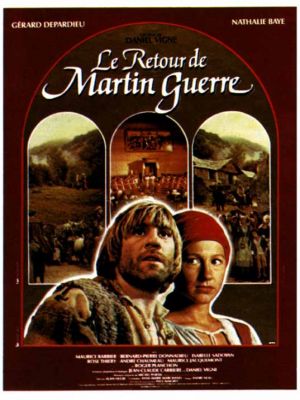
What would I do without Worldcat? 1.4 billion searchable items and counting. Sure, that monster library search engine is great for hunting down obscure books, magazines, theses that were read by only five people, and what have you. But I particularly like to use it to find films. I've tracked down loads of documentaries--on everything from serpent-handling West Virginians in the 1980s to Enlightenment philosophes in 18th-century France--and feature films like The Return of Martin Guerre and Andrei Rublev. You can find the most obscure titles on Worldcat. And, if you locate more than a few libraries that have a given movie, there's a good chance you'll be able to get a copy loaned to you.

I'm a firm believer in showing short film clips (15-20 minutes) in class. It breaks things up nicely and provides much needed visuals. (Moving pictures, I hear they call these things.)

I offer up some recent titles, all well worth watching in our out of the classroom. Yet, unfortunately, the BBC Four documentaries are only viewable on-line on the other side of the water.

Influenza 1918
January 18, 2010, 1 hour
It was the worst epidemic in American history, killing over 600,000 people—until it disappeared as mysteriously as it had begun.

American Experience: Wyatt Earp, 2010
Jan 25, 2010 at 9/8 C
Wyatt Earp has been portrayed in countless movies and television shows by some of Hollywood’s greatest actors, including Henry Fonda, Jimmy Stewart, and more recently, Kevin Costner, but these popular fictions often belie the complexities and flaws of a man whose life is a lens on politics, justice and economic opportunity in the American frontier.

Sam Cooke: Crossing Over
PBS, American Masters Series, 2010
American Masters celebrates the wonderful world of music game-changer and definitive soul singer Sam Cooke.

Louisa May Alcott: The Woman Behind ‘Little Women’, 2009
PBS, American Masters
The author of 'Little Women' is an almost universally recognized name whose reputation as a morally upstanding New England spinster masked a literary double life.

The Pacific
HBO Films, coming in 2010
The miniseries tracks the intertwined odysseys of three U.S. Marines - Robert Leckie (played by James Badge Dale), Eugene Sledge (Joe Mazzello) and John Basilone (Jon Seda) - across the vast canvas of the Pacific. The extraordinary experiences of these men and their fellow Marines take them from the first clash with the Japanese in the haunted jungles of Guadalcanal, through the impenetrable rain forests of Cape Gloucester, across the blasted coral strongholds of Peleliu, up the black sand terraces of Iwo Jima, through the killing fields of Okinawa, to the triumphant, yet uneasy, return home after V-J Day.

Killer Subs in Pearl Harbor, 2009
PBS, NOVA
Military and forensics experts investigate the sunken wreck of a Japanese sub and unravel a lingering mystery of WWII.

Lost Kingdoms of Africa: Ethiopia BBC Four
Historian Gus Casely-Hayford explores the history of the old African kingdom of Ethiopia.

Orson Welles over Europe, 2009
BBC Four
Simon Callow looks at the career of Orson Welles after he went into self-exile in Europe.

Tuesday, January 12, 2010

Post-AHA Roundup

Scott Jaschik, "Historians, Sons, Daughters," Inside Higher Ed, January 12, 2010
SAN DIEGO -- When Adam Davis was growing up and wanted paper to draw on, his parents gave him the blank back sides of the first typed drafts of the books that established his father, David Brion Davis, as one of the preeminent historians of slavery.

Scott Jaschik, "Ph.D. Supply and Demand," Inside Higher Ed, January 11, 2010
SAN DIEGO -- As history graduate students arrived in the large table-filled ballroom here Friday to try to learn how to find a job, the room was seriously overheated. These would-be professors didn't need any more sweat or discomfort.

Scott Jaschik, "Is Google Good for History?" Inside Higher Ed, January 8, 2010
SAN DIEGO -- At a discussion of "Is Google Good for History?" here Thursday, there weren't really any firm "No" answers. Even the harshest critic here of Google's historic book digitization project confessed to using it for his research and making valuable finds with the tool.

Marc Bousquet, "At the AHA: Huh?" Chronicle of Higher Ed, January 08, 2010
A funny thing happened on the way to the AHA this year -- American Historical Association staffer Robert B. Townsend issued his annual report on tenure-track employment in the field.

Marc Bousquet, "Who's a Historian to the AHA?" Chronicle of Higher Ed, January 08, 2010
My piece questioning the supply-side bent to the American Historical Association's 2010 job report has gotten thoughtful replies by historiann, Alan Baumler, Jonathan Rees, Ellen Schrecker, Sandy Thatcher and others, both at my home blog and here at Brainstorm.

David Walsh, "Highlights of the 2010 Annual Convention of the American Historical Association in San Diego," HNN, January 7, 2010

Lauren Kientz, "Exciting New Pedagogy Based in the History of Ideas," January 12, 2010, U.S. Intellectual History Blog
A decade ago, several professors at Barnard College created a pedagogy based in the History of Ideas called "Reacting to the Past." I attended a session at the AHA discussing this pedagogy

Saturday, January 9, 2010

Heather Cox Richardson's Richardson's Rules of Order Wins Cliopatria's Best Series of Posts

Randall Stephens

Congratulations to Heather Cox Richardson, contributing editor of THS blog, who is the winner of Cliopatria's Best Series of Posts for 2009! Heather's Richardson's Rules of Order won high praise from the premier history group blog. (I must admit, I was on the committee that was tasked to make the decision. But I recused myself of judging Heather's wonderful series.) We're thrilled that she took the award.

"It's the year of the female history blogger," writes Ralph Luker at Cliopatria, "with women having won at least 4½ of the 6 awards. It's also the first year in which one blog won two awards." The award was announced last night here at the AHA in San Diego.

Here's the description of Richardson's series from Cliopatria:

"Please remember that your professors are human and it's hard work to stand in front of a hundred pairs of eyes and talk for an hour," Heather Cox Richardson of U. Mass Amherst writes in a series of 9 (and counting) posts that collectively provide an instructive, gentle, and eminently useful guide for college students in history classes. In an age of changing rules and often a challenging lack of civility, Richardson provides both useful information and a practical etiquette manual which could help improve the classroom environment everywhere. This series of posts will soon be finding its way onto syllabi in history courses across the country.

Friday, January 8, 2010

Know Your Editor: Susan Ferber, Executive Editor, American and World History, Oxford University Press

Randall Stephens

[Cross posted at Religion in American History.]

I liked it when the AHA met in NYC last year. Better yet, this year it’s in sunny San Diego, a nice break from the cold, snow, slush, and raging swine flu of New England. (And I forgot to bring my wetsuit.)

I spent part of Thursday reconnoitering the area and meeting with various friends in the profession. I also
had a chance to sit down with Susan Ferber, executive editor, Oxford University Press, and pose a few questions about publishing.

In the video embedded here I ask her about what she looks for in a proposal and what she thinks about the recent boom in religious history. I also ask her about the matter of converting a dissertation into a book. I was reminded of a piece that appeared in the Chronicle nearly two years ago: “Goodbye to All That” by Rachel Toor. A former editor, Toor summed up a meeting she had with a friend who wondered how her dissertation would fare when submitted to a press:

Wanting to be helpful, and, since I was no longer an editor constantly on the prowl for potentially promising manuscripts, I gave her my honest opinion: Who would be interested in a book like this?


I pointed out that, even in the way she described it to me, she was using coded language, jargon that would be a big flashing red light to warn off anyone outside of her particular academic discipline. What publisher, I asked, was going to want a book on a topic unknown to most people, especially if there was no underlying argument or theoretical framework?

Ultimately, what I wondered was whether anything in the dissertation was worth turning into a book.


I'm not always the most fun lunch date.


True enough. Ferber’s remarks, by contrast, are positively cheerful. So take heart, your dissertation may have a ready audience as a book. Just think carefully about readership and how best to frame your argument.

Wednesday, January 6, 2010

John Fea on Interviewing for that History Job

Over at The Way of Imrpovement Leads Home, John Fea offers hints for all those individuals interviewing for history jobs at the AHA, ASCH, and, or, just over the phone. Along with giving general tips, Fea provides more specific advice for candidates who are interviewing for jobs at teaching institutions, research universities, and church-related schools.

Here's a particular useful bit:

Once you find out who will be doing the interview, start researching. By this point you should have already familiarized yourself with the department web site, but now you want to go a bit deeper. Find out as much as you can about the people who will be seated on the other side of the table. What courses do they teach? (You do not want to propose a course that gets too close to the "turf" of another professor in the department). What are their research interests? (You may want to mention how your work has some theoretical connections to the work of a particular interviewer). All of this stuff is pretty straightforward and most good candidates do not need to be told any of this, but you might be surprised to learn just how many people come to an interview unprepared.

Read more here.

Monday, January 4, 2010

Teaching the Writing of History Roundtable in January Issue of Historically Speaking

Randall J. Stephens

Graduate students know the drill well. Bulking up on historiography for qualification exams is a time-honored tradition. Who argued what, when, where, and why? What are the contours of the field or subfield? What did the transition from the orthodox position to the revisionist and then
post-revisionist schools look like? Graduate students pore over books in dusty libraries and stare, red-eyed, at digitized articles.

Those who train historians pay a great deal of attention to arguments and counterarguments, theses and antitheses. In graduate and
undergraduate research seminars professors also stress the importance of analyzing evidence, applying theoretical models, and making a plausible case. But is the same amount of energy and study devoted to the writing of history? “Without the imaginative insight which goes with creative literature,” wrote English historian C.V. Wedgwood, “history cannot be intelligibly written.”

In the lead piece of a roundtable on "How to Teach the Writing of History" (
Historically Speaking [January 2009]), Stephen Pyne discusses the importance of train historians how to write and offers useful examples of pedagogy. His remarks are followed by reflections from Michael Kammen, Jill Lepore, and John Demos. I post excerpts from each here.

[The full forum will be available at Project Muse. Subscribe to HS to read more.]

HOW TO TEACH THE WRITING OF HISTORY: A ROUNDTABLE, Historically Speaking (January 2009)

Riding the Melt*
Stephen J. Pyne

History is a book culture. We read books, we write books, we promote and award tenure on the basis of books, and at national meetings we gather around book exhibits. We’re a book-based discipline. But we don’t teach how to write them. It’s an odd omission. We accept statistics, geographic information systems, languages, oral history techniques, paleography, and other instruments as legitimate methodologies; we don’t accept serious writing. Good writing seems to mean using the active voice, not confusing “it’s” with “its,” and where possible, shunning split infinitives. We obsess over historiography, note the distorting power of literary tropes, and list the fallacies of historical arguments, but don’t understand the medium that carries our message. Literary craft remains a black box, like the software running our laptops. Yet we cannot avoid words, and careers rise and fall on the basis of what we publish; we just don’t explain how to transmute research into texts. The kind of writing we do doesn’t even have a name. So while many practitioners seem keen to unpack texts, few seem eager to teach how to pack them in the first place.

Why? It may be that the simple production of data has become a sufficient justification for scholarship. . . .

A few years ago, on a stint as a visiting professor, I was asked to lead a morning seminar on writing. That sparked my amorphous concerns into a desire to offer a graduate course that would address the theory and practice of making texts do what their writers wished. It would be English
for historians, as we might offer statistics for ecologists or physics for geologists. It’s been the best teaching experience in my career. . . .

* An earlier version of this essay appeared in the Chronicle Review, July 12, 2009.

Historians on Writing
Michael Kammen

Historians distinguish themselves in diverse ways, yet relatively few are remembered as gifted
prose stylists, and fewer still have left us non-didactic missives with tips about the finer points of writing well. Following his retirement from Cornell in 1941, Carl Becker accepted a spring term appointment as Neilson Research Professor at Smith College. Early in 1942 he delivered a charming address in Northampton titled “The Art of Writing.” Although admired as one of the most enjoyable writers among historians in the United States, Becker’s witty homily for the young women that day concerned good writing in general, and his exemplars ranged widely. He cited Lewis Carroll’s Alice’s Adventures in Wonderland, for example, because “the author’s intention was to achieve a humorous obscurity by writing nonsense. He had a genius for that sort of thing, so that, as one may say, he achieved obscurity with a clarity rarely if ever equaled before or since.” . . . .

. . . Samuel Eliot Morison, who took Parkman as his model, lamented that American historians “have forgotten that there is an art of writing history,” and titled his homily “History as a Literary Art.” Subsequently Arthur M. Schlesinger, Jr., George Kennan, and C. Vann Woodward also
provided instructive essays explaining how and why historical writing might flow in a creative manner that can engage the general reader. . . .

How to Write a Paper for This Class
Jill Lepore


I have got a handout I’ve been using for a while now. It’s your basic, How to Write a Paper for This Class. Everyone’s got one of these handouts. Pyne’s new book amounts to a handout that might be called How to Write a Book for This Profession. I’m glad he’s written it and can’t think of much he’s said, in this excerpt, that I’d disagree with, except that I happen to think that learning how to write essays is just as important as, and maybe more useful than, learning how to write books. I am not convinced that books ought to be the measure of merit in our profession. Nor am I convinced that all historians ought to write books— and, in any case, not all do. Everyone has got to know how to write an essay, though. That quibble aside, I certainly don’t dispute Pyne’s premise: historians generally don’t care much about writing, and they should, although a surprising number believe, pretty fiercely, that they shouldn’t. . . .

Response to Stephen Pyne

John Demos

My first reaction on reading Stephen Pyne’s essay was “hooray!” And so was

my second. And my third. Without much recognizing it, historians have—for several generations now—downgraded the writing part of their task. Time was when writers of history held a solid stake within the larger domain of serious literature: Gibbon, Macaulay, Parkman, Prescott are the first, most obvious, names to come to mind. No doubt the change, the downgrading, has had much to do with professionalization; as the discipline became, in fact, a discipline, priorities shifted. Perhaps there was something of a seesaw effect: when concern with research and interpretive technique went up, prose composition went correspondingly down. What “good writing” has come to mean, in the minds of most historians, is clear and effective communication: getting your point across.

It ought to mean so much more. Pyne is absolutely right to spotlight the importance of evocation alongside exposition, and voice as much as thesis. . . .

I believe, however, that Pyne is mistaken in one respect: his insistence that history be sharply distinguished from fiction. No boundary line divides the two; at most there is a wide and nebulous borderland. Open any work of history, even the most conventional sort, and you will find statements that involve a degree of “making it up.” We are always filling little holes in our evidence with bits of inference or outright invention—whether we acknowledge this or not. (And better, for sure, if we do.) . . . .

P.S.: Robert Townsend has alerted me to an interesting piece he wrote at the AHA blog back in 2008: "From the Archives: Why Can’t Historians Write?" He discusses the perennial conversation about bad writing within the profession. A 1926 AHA report, linked to the post, reveals similar concerns from yesteryear. "
Instead of the current bugaboo of postmodernism," writes Townsend, "the authors blame the scientific pretensions of their day for elevating 'Facts' over a more 'humanized' form of writing. And where errant politics is blamed, they cite the excesses of commercialism and the nationalistic sentiments marked by First World War."